Cradle Cap: What It Is & How to Handle It Gently
Cradle cap is the greasy, yellowish, flaky scale that appears on a baby’s scalp — sometimes the eyebrows, behind the ears, or in the neck folds — usually in the first weeks to months. It’s a form of seborrheic dermatitis: harmless, not contagious, not an allergy, not itchy for most babies, and not caused by anything you did or didn’t wash. It generally clears on its own over weeks to months. The entire evidence-based approach is gentle: soften, loosen, wash, repeat, and resist the urge to pick.
Why it shows up
Hormones and oil glands. Maternal hormones still circulating after birth stimulate the baby’s oil glands, and the excess oil traps skin cells that should have flaked away invisibly. That’s the leading explanation for why it appears in the newborn months and not later.
Ordinary skin yeasts. Malassezia, a yeast that lives on everyone’s skin, is thought to play a role in seborrheic dermatitis. It’s a normal resident, not an infection you caught.
Newborn skin turnover. Skin renews rapidly in the first weeks. The same process behind the flaking and peeling of the first fortnight, on an oily scalp, produces stuck-on scale instead of dust.
Not hygiene. Cradle cap appears on immaculately bathed babies. Under-washing can let scale build up, but the cause isn’t dirt, and the fix is never scrubbing.
What it looks like — and what it isn’t
| What you’re seeing | Likely what it is | What it needs |
|---|---|---|
| Greasy yellow or brown scale, stuck flat to the scalp, sometimes thick patches | Cradle cap | Softening and gentle washing |
| Fine white flakes on an otherwise normal scalp | Mild cradle cap or dryness | Regular gentle shampooing |
| Scale extending to eyebrows, behind ears, or into neck and armpit folds | Still seborrheic dermatitis | The same gentle routine, applied there |
| Red, dry, itchy patches on cheeks or limb creases in an unsettled baby | Something for your pediatrician to look at | A visit, not a home remedy |
| Small red or white bumps on cheeks and nose around weeks 2–6 | Newborn acne | Time and plain water |
| A round, scaly patch with hair loss inside it | Not typical cradle cap | A pediatrician’s assessment |
| Weeping, crusting, pus, or spreading redness | Possible skin infection | A same-day call |
The distinguishing features of cradle cap are that it’s greasy rather than dry, it sits on the scalp rather than spreading over the body, and — importantly — the baby doesn’t care. A baby who is scratching, unsettled and clearly uncomfortable is telling you it’s something else.
The gentle routine
This is the whole treatment, and it works slowly on purpose.
- Soften first. A small amount of a plain emollient — mineral oil or petroleum jelly is the usual suggestion — rubbed into the scale and left on for a short while helps loosen it. Don’t leave oil sitting on the scalp for days; that adds to the buildup you’re trying to clear.
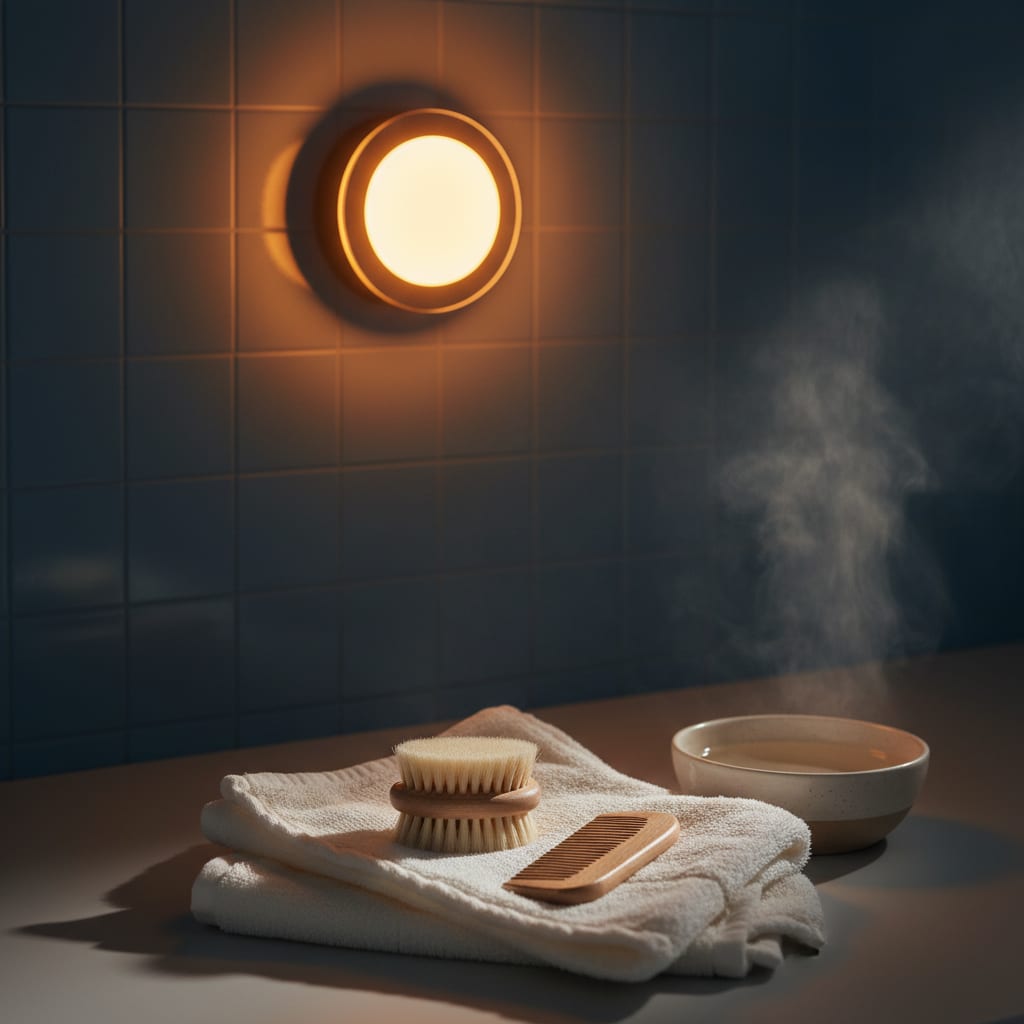
- Loosen with something soft. A soft-bristled brush or a fine comb, worked gently in the direction of the hair. A dedicated kit like the Frida Baby 3-Step Cradle Cap System bundles a sponge, brush and comb, but a clean soft baby brush does the same job.
- Wash it out. A mild baby shampoo, worked through properly and rinsed until the hair doesn’t feel coated. Leaving oil in is the most common reason a routine stops working.
- Repeat on a schedule, not on impulse. Every few days, or daily during a flare if your pediatrician suggests it. Consistency beats intensity every single time.
- Stop when the skin is pink. Any redness or soreness underneath means you’ve been too enthusiastic. Back off entirely for a few days.
What not to do
Don’t pick the scale off. This is the hardest instruction in newborn care and the most important one here. Lifting stuck scale takes skin with it, and broken scalp skin can get infected.
Don’t scrub. Friction inflames. Gentle really is the mechanism, not a disclaimer.
Don’t use adult anti-dandruff shampoos. Medicated formulations, including tar and strong antifungal shampoos, are not for infant scalps unless your pediatrician specifically directs you to one.
Don’t reach for steroid creams on your own. If a doctor prescribes something, use it as directed. Applying leftover creams from elsewhere is not the same thing.
Don’t rely on kitchen and internet cures. Olive oil, coconut oil, breast milk, lemon juice and apple cider vinegar all circulate as cradle-cap fixes. None is established as effective, several are irritating, and essential oils have no place on a newborn’s scalp.
Don’t over-layer hats. Warm, sweaty scalps make it look worse. Dress her for the room, both for her skin and for safe sleep — the same reasoning as in the early weeks of settling in.
Normal vs call the pediatrician
| Usually normal | Call the pediatrician |
|---|---|
| Greasy yellow scale on the scalp in the first weeks to months | Weeping, crusting, pus, or a spreading red area — possible infection |
| Some scale on eyebrows or behind the ears | A rash spreading widely over the body, or into folds with raw, red skin |
| Slow improvement over weeks to months | Cradle cap that worsens steadily despite gentle care |
| A baby who is entirely untroubled by it | A baby who seems itchy, uncomfortable, or is sleeping and feeding worse |
| A little hair coming away with the scale | Patchy hair loss with a distinct round scaly area |
| Flare-ups that come and go | Any rash alongside a fever — under three months, that’s urgent, any hour |
| Clearing by around six to twelve months | Scale still significant well into the second year |
Most cradle cap needs a photo in four weeks rather than an appointment. The exceptions above are the ones where a look from someone who can actually see the scalp is worth far more than any routine.
FAQ: cradle cap
How long does cradle cap last?
Typically weeks to months, most often clearing over the first six to twelve months without any treatment beyond gentle washing. Flares that come and go along the way are normal.
Can I pick cradle cap off?
Please don’t. Loose flakes that come away during washing or gentle brushing are fine; anything still stuck should be left to soften. Prising scale off risks breaking the skin underneath and inviting infection.
Does cradle cap mean my baby has eczema or allergies?
No. Cradle cap is seborrheic dermatitis, a different condition from eczema, and it isn’t a food or laundry reaction. Persistent itchy, dry, inflamed patches elsewhere on the body are a separate question for your pediatrician.
Should I use olive oil or coconut oil on cradle cap?
They’re the most-recommended kitchen remedies and neither is established as helpful; both can irritate. Plain mineral oil or petroleum jelly for a short softening period, followed by a proper wash with mild baby shampoo, is the standard approach — and if in doubt, ask your pediatrician what they prefer for your baby.