How to Warm a Bottle Fast at 3am Without Waking Everyone
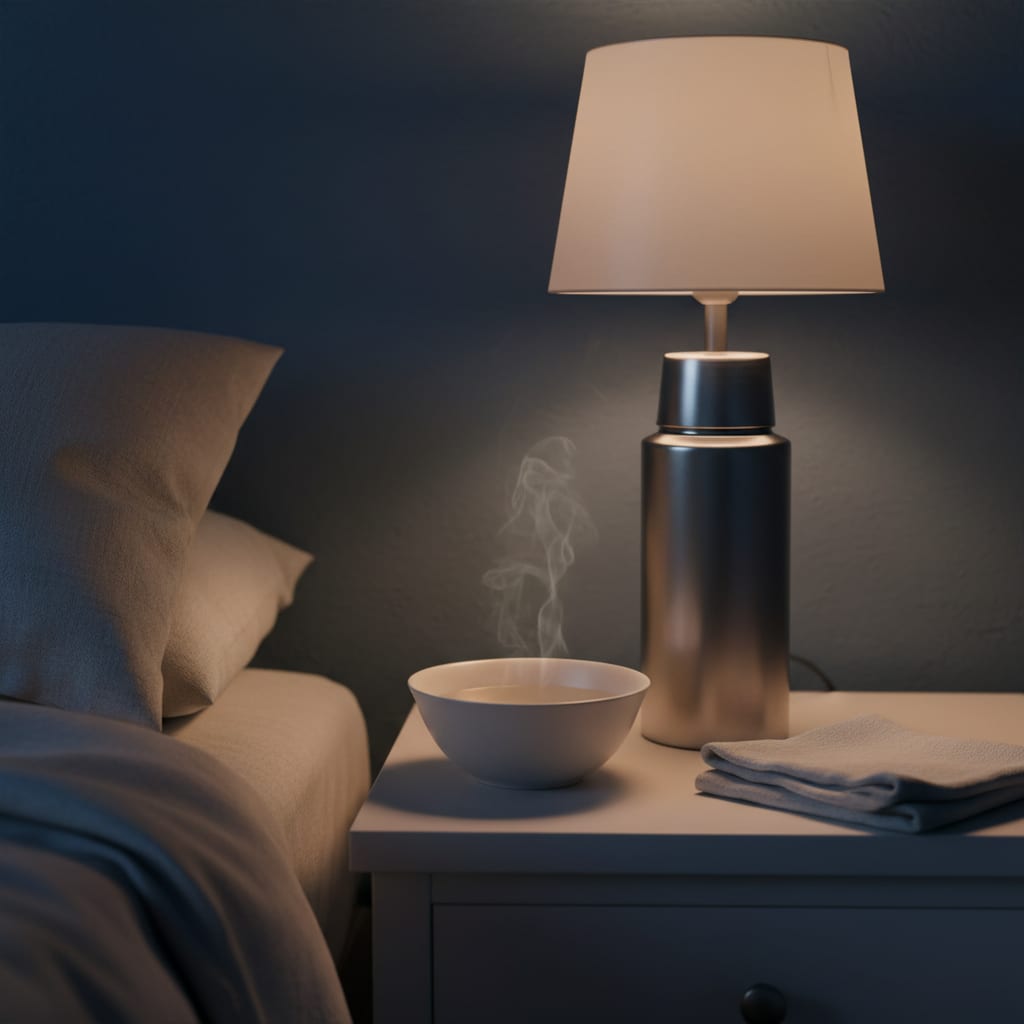
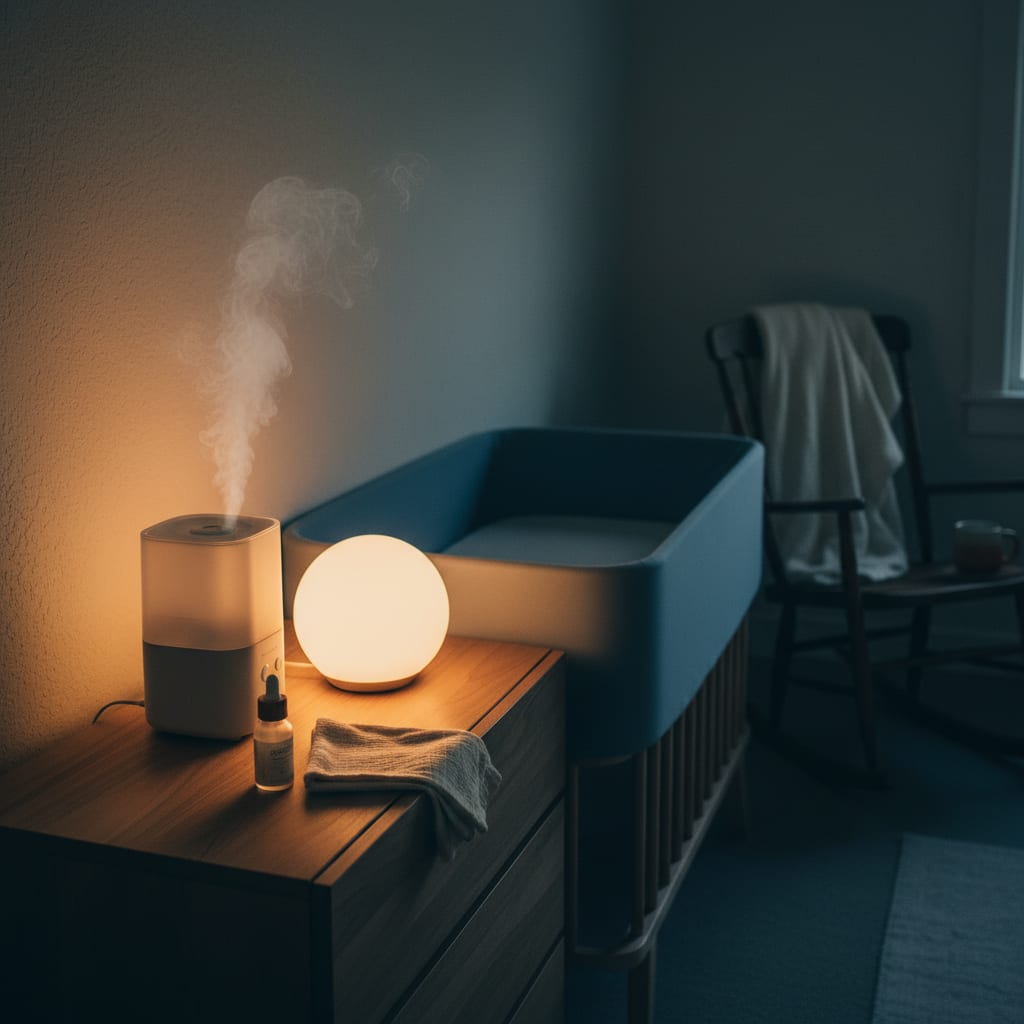
The fastest way to warm a bottle at 3am is not to need to. The CDC says breast milk “does not need to be warmed” and that infant formula “does not need to be warmed before feeding.” If she’ll drink it cool, you skip the whole step. If she wants it warm, keep a water-bath warmer or a bowl of warm water at the night station so nobody walks to the kitchen. Hold sealed breast milk in warm water for a few minutes. Run formula under warm water. Test a few drops on your wrist. Never use the microwave.
Why the 3am bottle is slower than it should be
It’s rarely the warming. It’s the walk to the kitchen with the hall light on, the fridge, and the tap that takes forever to run warm while the crying builds. By the time she’s fed, you’re both properly awake, and maybe the other adult is too. So the fix happens at bedtime: decide which milk the night bottle will be and put the warming kit within arm’s reach of where you feed. It’s the pre-staged station from how to survive night feeds, applied to the one step that usually sends someone to the kitchen.
Step one: find out if she minds
Before you build a warming routine, try one bottle at room temperature or straight from the fridge on a calm daytime feed. The NHS puts it plainly: “You can feed expressed milk straight from the fridge if your baby is happy to drink it cold.” The FDA says of warming formula: “This isn’t necessary.”
Some babies don’t notice, some protest once and then drink it, and some won’t take it at all. If yours doesn’t mind, the warming step is gone from your 3am bottle.
For powdered formula, the AAP’s HealthyChildren site adds a shortcut: a bottle “can be prepared by adding powdered formula and room temperature water from the tap just before feeding,” and it can then be fed “with no additional refrigeration or warming needed.” That only applies to babies who don’t need the extra steps below.
The fastest safe method for each kind of milk
Breast milk from the fridge. CDC’s method: keep the container sealed and put it “into a bowl of warm water,” or hold it “under warm, but not hot, running water for a few minutes.” The bowl is the one that works at the bedside. Before bed, fill a vacuum flask like the Thermos Stainless King with warm tap water. At 3am, pour it into a small bowl and stand the bottle in it while you change the diaper. Once breast milk is brought to room temperature or warmed, CDC says to use it within 2 hours.
Frozen breast milk. Don’t try to thaw it at 3am. CDC’s preferred route is the fridge overnight. Move tomorrow night’s bag to the fridge the evening before. Warm-water thawing is allowed too, but slow from frozen. Fridge-thawed milk is good for 24 hours, counted from when it’s fully thawed. Never refreeze it. Betteroo’s guide to keeping a frozen stash and thawing it safely has the full timings in one place.
Formula made earlier and refrigerated. CDC and FDA both describe one warming method: place the bottle under running warm water and keep the water off the nipple. A warmer is the bedside version of that. CDC says a bottle you won’t start within 2 hours of making goes straight in the fridge, to be used within 24 hours.
Ready-to-feed liquid formula. Nothing to mix, and nothing to wait for if she takes it at room temperature. CDC’s Cronobacter page says liquid formula “is made to be sterile” and recommends it “when possible, especially if your baby is at higher risk.” For a very young baby that makes it the quickest safe 3am option there is.
Babies who need the extra steps
CDC lists three groups who need extra care with powdered formula: babies “younger than 2 months old,” babies born before 37 weeks, and babies with a weakened immune system. For them, CDC says powdered formula “must be mixed with very hot water,” around 158°F (70°C), to kill germs like Cronobacter. Boil the water, wait about five minutes, then mix. The AAP’s HealthyChildren site says to cool the capped bottle to body temperature before feeding, under cool running water or in an ice bath.
No warm-water shortcut replaces that; mixing powder with lukewarm water skips the step CDC says these babies need. If your baby is in one of these groups, the realistic options are ready-to-feed liquid at night or a plan your pediatrician has agreed with you.
 Fewer 3am wakes to warm a bottle for
Betteroo builds a personalized sleep plan for your baby's age, so you know which night wakes are real feeds and which can settle.
Take the free sleep quiz →
A warmer or a bowl of warm water?
- A bowl of warm water costs nothing, is silent and needs no outlet. For sealed breast milk it’s exactly what CDC describes, as long as the flask was filled at bedtime.
- A water-bath warmer on the nightstand, like the Philips Avent Premium Fast Bottle Warmer, saves the most steps if you warm a bottle every night. Follow its manual, and test the milk on your wrist anyway. Take the bottle out once it’s warm instead of leaving it there “until she wakes,” because the 2-hour clock starts when it warms.
If you want to compare warmer types side by side (water bath, steam, instant water), onlymomreviews has a full breakdown of bottle warmers.
Never the microwave. CDC warns that microwaves heat unevenly and create “hot spots” that can burn a baby’s mouth and throat, and FDA adds that the bottle can stay cool while they form. Breast milk doesn’t go on the stove either.
The wrist test, in the dark
CDC says to put a few drops on your wrist before feeding. For formula, it should “feel warm, not hot.” Use the milk, not the outside of the bottle, which tells you nothing about what’s inside.
Then feed the way you would at noon. Hold the bottle and never prop it. Go slowly with paced bottle feeding so a warm, fast bottle doesn’t get gulped down in four minutes. If you’re splitting the night, put the warming kit in the on-duty parent’s room as part of the handover in newborn night shifts, so the off-duty parent stays asleep.
The safe-sleep part of a sleepy feed
A warm bottle and a dim room can put you to sleep too. The AAP says the risk of sleep-related infant death “is up to 67 times higher when infants sleep with someone on a couch, soft armchair or cushion.” If you might doze off, feed somewhere other than the sofa. If you feed in your bed, put her back in her own sleep space before you sleep. She always goes down on her back, on a firm, flat surface. Mixing breast and bottle overnight? See combination feeding at night.
When to call the pediatrician
- She seems to have taken milk that was too hot: crying at the bottle, redness or blisters in her mouth, or refusing to feed afterwards.
- She refuses bottles across several feeds, has fewer wet diapers than usual, or is hard to wake for feeds.
- You’re unsure which preparation steps apply to your baby’s age, prematurity or health.
If she’s struggling to breathe or you can’t wake her, call 911.
FAQ: warming a bottle at night
Does breast milk or formula have to be warm?
No. CDC says breast milk can be served “room temperature or cold,” and that formula “does not need to be warmed before feeding.” Warming is about what your baby prefers, not safety.
Can I warm a bottle early and leave it in the warmer until she wakes?
Not for long. CDC says warmed breast milk should be used within 2 hours. Prepared formula should be used within 2 hours of preparation and within one hour of starting the feed. Warm it when she stirs, not at midnight for a 3am wake. Leftovers never carry over to the next wake: CDC says to throw out formula left in the bottle after a feed, and leftover breast milk after 2 hours.
Sources
- CDC: Breast Milk Storage and Preparation, Infant Formula Preparation and Storage and Cronobacter prevention
- FDA: Infant Formula Safety Do’s and Don’ts
- AAP (HealthyChildren.org): How to Safely Prepare Baby Formula With Water, Tips for Freezing & Refrigerating Breast Milk and How to Keep Your Sleeping Baby Safe
- NHS: Expressing and storing breast milk