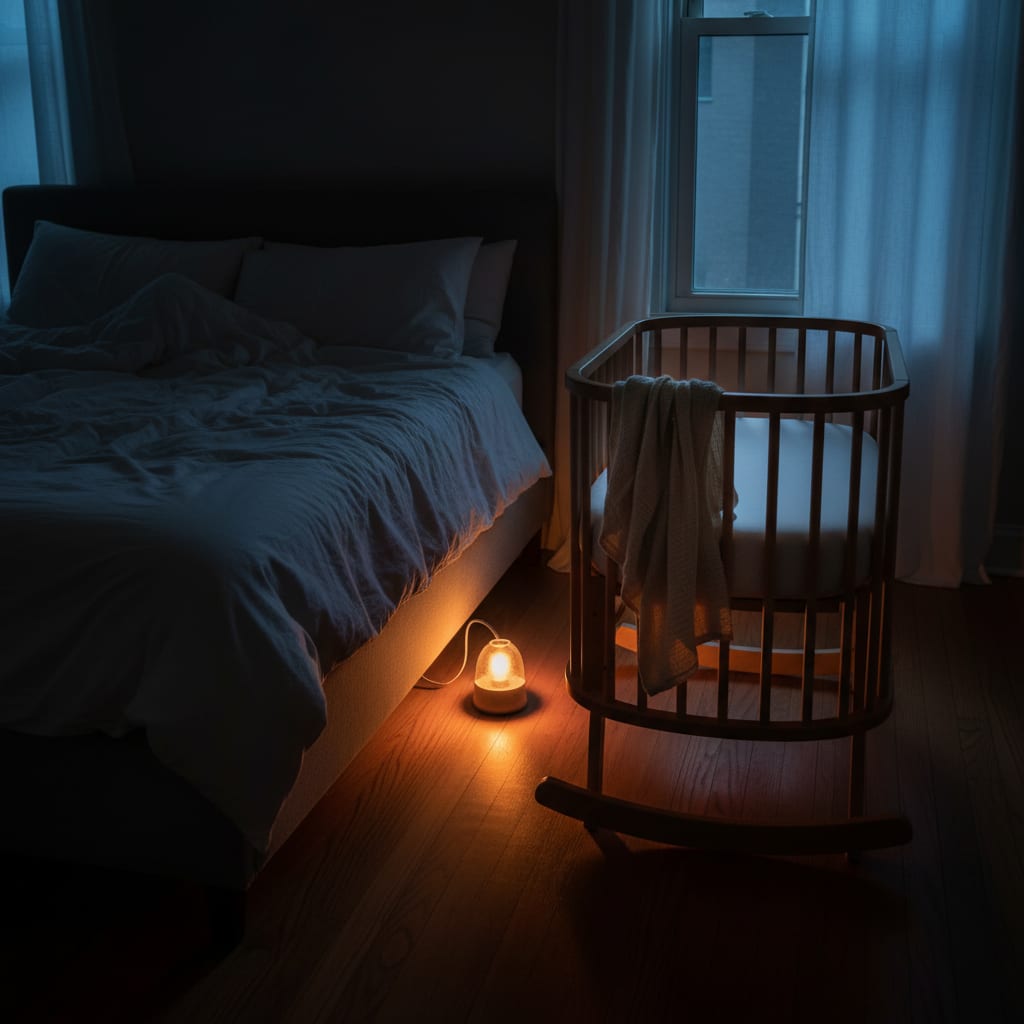
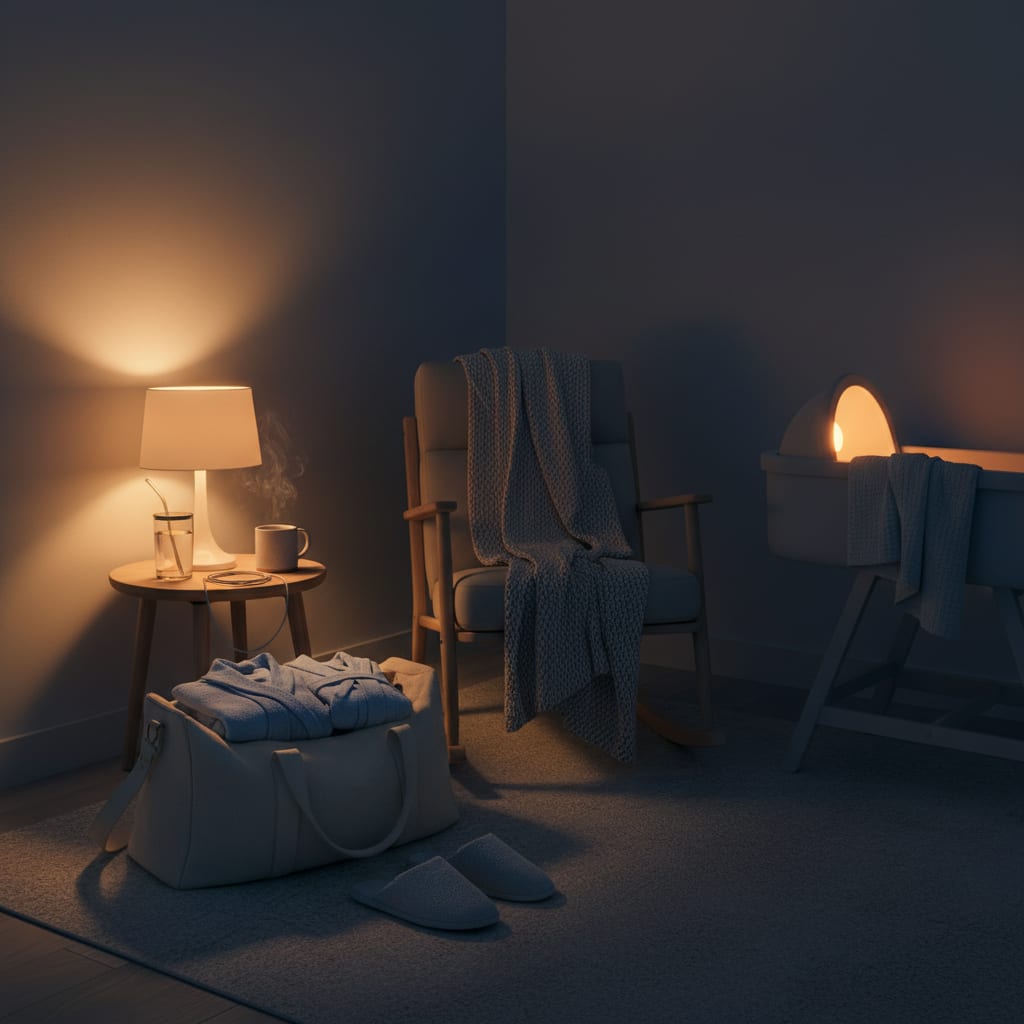
Newborn Fell Asleep Skin-to-Skin? Moving Her to the Bassinet
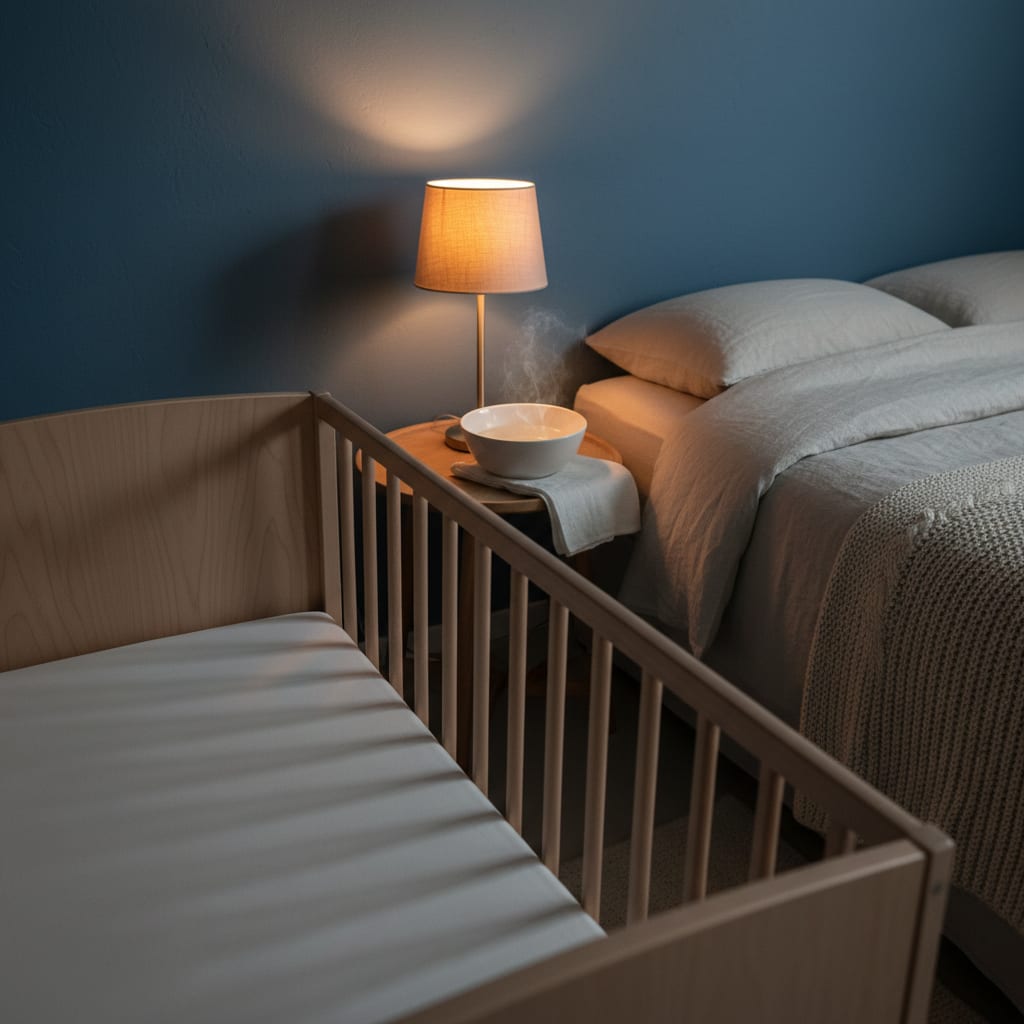
Evening skin-to-skin is one of the kindest things you can do for a newborn who falls apart at dusk. The AAP’s HealthyChildren site lists warmth, steadier heartbeat and breathing, more deep and quiet-alert time, and less crying among its benefits. Do it while you are awake and alert, with her in just a diaper against your bare chest. If she falls asleep there, that is fine for as long as you stay awake. Once she is deeply asleep, or the moment your own eyes get heavy, dress her and move her onto her back in a flat, empty bassinet.
Why her chest works when nothing else does
Around six o’clock, for about four weeks, my daughter would not be rocked, bounced or fed into calm. What did work, almost every time, was taking her down to her diaper, opening my shirt and laying her on me. Within a few minutes the crying turned to grunting, the grunting turned to breathing, and then she was asleep.
That isn’t a trick, it’s physiology. HealthyChildren’s page on skin-to-skin care (the same thing as “kangaroo care”) says the contact “can promote bonding and the release of feel-good hormones” and “can also help regulate your baby’s body temperature and heart rate.” Its list of benefits for babies includes warmth, “more time spent in the deep sleep and quiet alert states” and “less crying.”
Two details on that page matter for an evening routine. “These benefits are apparent even when kangaroo care happens for only a few minutes each day,” so you don’t need an hour. And once you’re home, it names “first thing in the morning or after a bath” as good moments for it. After a bath is usually the evening.
If your evenings look like ours did, the witching hour post has the bigger picture on why newborns come undone at that time of day.
How to set it up for an evening
- Undress her to a clean diaper. That’s the “skin” half.
- Open your top down the front. HealthyChildren’s advice is to “wear clothing that opens down the front.” A button-front set like the Ekouaer button-down nursing pajamas means you’re already dressed for it after the bath.
- Lay her upright on your chest. The same page says, “You can snuggle with your baby upright on your chest, or gently lay their head against your chest.” Turn her head to one side so you can see her nose and mouth.
- Cover her back, never her face. Your open top or a light blanket around her back keeps her warm.
- Choose your seat by how tired you are. That decision matters most, so it gets its own section.
Both parents can do this; HealthyChildren says so outright. On a bad evening, a partner’s turn is a real break.
The line that doesn’t move: you have to stay awake
The guidance is gentle about skin-to-skin and completely firm about sleep. The AAP’s safe-sleep page says that after skin-to-skin at birth, “or when the mother needs to sleep or take care of her other needs, the baby should be placed on their back in a bassinet with no incline.” NIH Safe to Sleep agrees: “When not having skin-to-skin time, baby should be placed on their back in their own separate sleep area.”
The dangerous version isn’t the baby asleep on you. It’s both of you asleep. NIH Safe to Sleep is blunt: “Couches and armchairs are never safe places for babies to sleep. These surfaces are extremely dangerous when an adult falls asleep while feeding, comforting, or snuggling with baby.” The AAP puts a number on it: the risk of sleep-related infant death is “up to 67 times higher when infants sleep with someone on a couch, soft armchair or cushion.”
So our rule was simple. If there was any chance either of us would doze, no skin-to-skin on the sofa or in the armchair. And the moment eyes got heavy, she went down on her back in the bassinet, ready or not. Awake and annoyed in a safe space beats asleep on a parent who is about to nod off.
If you wake up and find you fell asleep holding her, the AAP says to move her “back to their own sleep space as soon as you wake up.” Then look at what made you drift off. Needing to stay up later than you can manage is a setup problem, not a willpower one, and the postpartum sleep setup post covers planning the night around that.
The move from chest to bassinet
A baby asleep skin-to-skin is warm and undressed, which makes the transfer trickier. The order that worked for us:
- Wait for deep sleep. Look for a slack face, slow even breathing and an arm that drops heavily when you lift it an inch and let go.
- Dress her before you move her. A wearable swaddle like the HALO SleepSack Swaddle zips on with little disturbance, and nothing loose goes into the bassinet with her.
- Keep the room right. Betteroo’s guide to where to set the nursery thermostat puts the target at about 68 to 72°F (20 to 22°C). The AAP warns that “overheating can increase the risk of SIDS,” so warmer isn’t kinder. Warm the sheet with your hand for a minute; never put a heat pack or bottle in the bassinet.
- Lower her bottom first, head last, slowly. A fast lay-down sets off the newborn startle reflex.
- Keep a still hand on her chest for a slow count before you lift it away.
The full sequence, including what to do when it fails three nights running, is in why your baby wakes the second you put them down.
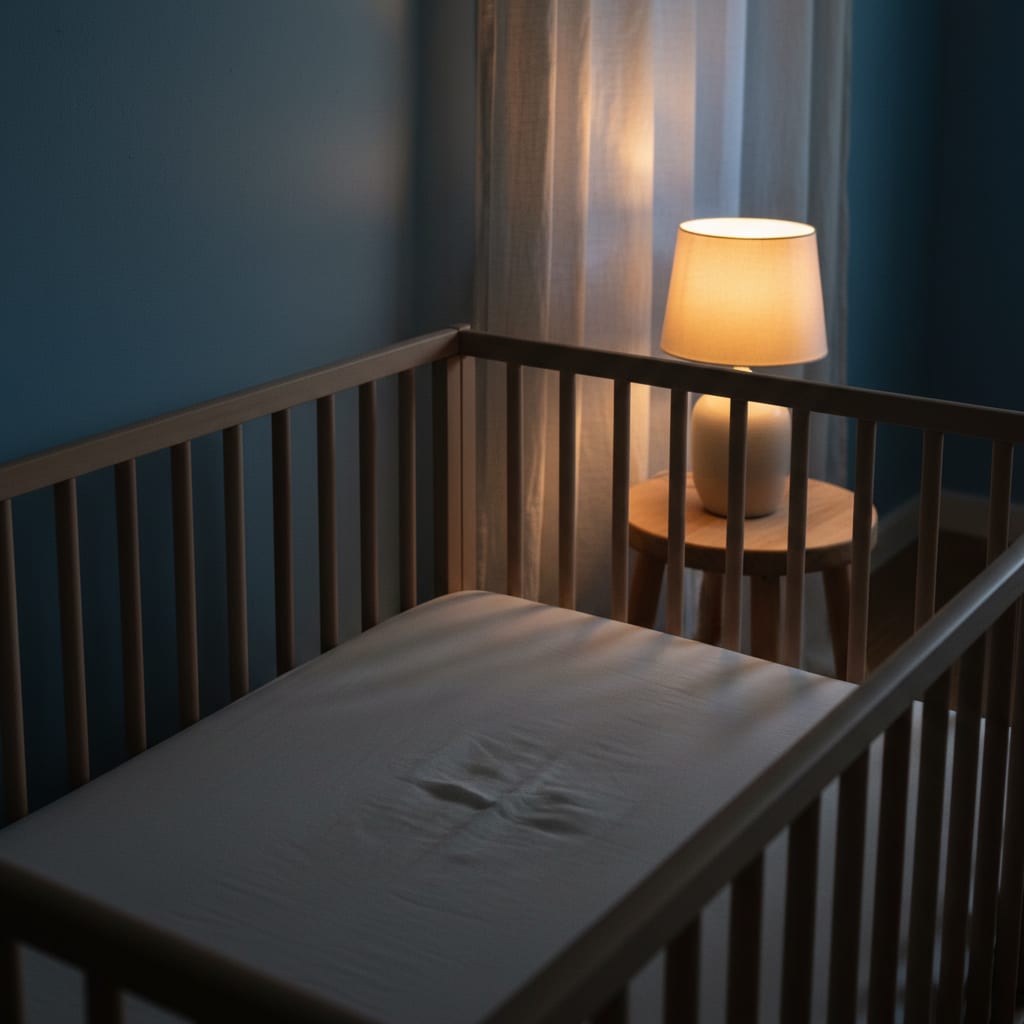
The bassinet stays bare: a fitted sheet and her, on her back. The AAP asks for “a firm, flat sleep surface” and notes that “any surface that inclines more than 10 degrees isn’t safe for your baby to sleep on.”
 Calm in your arms is half of it; the timing is the other half
Betteroo builds a personalized sleep plan for your baby's exact age, so the evening wind-down lands when she is actually ready to sleep.
Take the free sleep quiz →
Making it part of the evening
Once skin-to-skin stopped being an emergency fix and became a step in the evening, it got easier. Ours went bath, skin-to-skin, feed, sleep sack, bassinet. Some nights the sleep sack went on a sleeping baby; some nights she went down drowsy. Both were fine. Betteroo’s piece on a short wind-down you repeat every night makes the point that “the specific steps matter less than the consistency.”
One honest caveat: skin-to-skin calms a baby, but it doesn’t feed an overtired or hungry one, and some evenings she screamed on my chest anyway. That’s still within normal.
When to call the pediatrician
Skin-to-skin is comfort, not treatment. HealthyChildren’s fever page says to call right away if a baby younger than 3 months has a temperature of 100.4°F (38.0°C) or higher, or if a baby with a fever looks very ill, is unusually drowsy or very fussy, or has breathing difficulty. Call too if evening crying goes on for hours, night after night, and nothing helps, or if anything about her looks wrong to you.
And if you’re too tired to trust yourself to stay awake through a session, tell your own doctor or midwife. That’s a real problem with real help, not a parenting failure.
FAQ: skin-to-skin and the bassinet
Is it okay if my newborn falls asleep on my chest?
Yes, as long as you stay awake and alert. Once she’s deeply asleep, or as soon as you feel drowsy, move her to her bassinet on her back. Never doze with her on a sofa or armchair.
How long should evening skin-to-skin last?
There’s no set length. HealthyChildren says the benefits show up “even when kangaroo care happens for only a few minutes each day.” Ten minutes after a bath counts.
Should she go into the bassinet asleep or awake?
Either is fine in the newborn months. What matters is that she goes down on her back, on a firm flat surface, with nothing loose around her.
Sources
- AAP (HealthyChildren.org): Skin-to-Skin Contact: How Kangaroo Care Benefits Your Baby
- AAP (HealthyChildren.org): How to Keep Your Sleeping Baby Safe: AAP Policy Explained
- AAP (HealthyChildren.org): Fever: When to Call the Pediatrician
- NIH Safe to Sleep: Ways to Reduce Baby’s Risk and Frequently Asked Questions