How to Sleep Better Postpartum: Start With the Bed
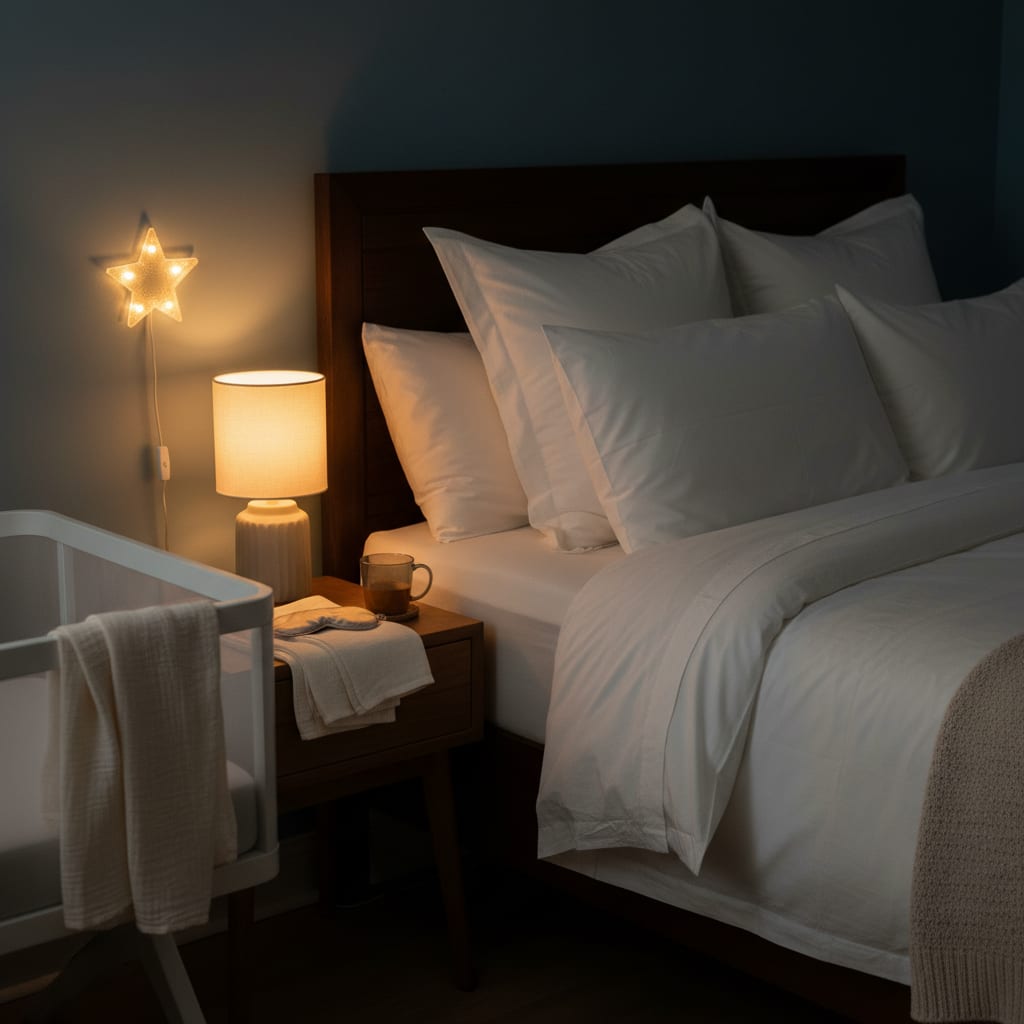
How do you sleep better postpartum? You can’t add hours — the baby holds those — but you can make the hours you get count more, and most of that is the bed itself: breathable cotton everything (night sweats are coming), a protector on the mattress and pillows (fluids are coming), a small tower of pillows for propping (healing is slow), and spares staged within arm’s reach for the 3am change. None of this needs to be fancy; some of it is worth doing well. Here’s the setup I wish I’d built in week 38 instead of week 3.
Why the bed suddenly matters so much
Postpartum sleep is short and broken — that part isn’t fixable by shopping, and I won’t pretend otherwise. But the sleep you do get happens in a bed that’s suddenly working double shifts: you’re sweating out pregnancy fluid (the soaked-sheets phase is normal), possibly leaking milk, possibly healing from surgery, and getting in and out of bed more times a night than a hotel minibar. A bed that’s breathable, protected and easy to reset takes real friction out of nights that have no friction to spare. It’s week-by-week recovery logic applied to the mattress.
Layer one: breathe
Night sweats make fabric choice the least optional part of this list. Cotton breathes and survives constant hot washes; slick synthetic sheets hold heat and smell like regret by August. If your sheets are polyester, this is the one swap I’d make before the baby comes. If there’s room to do it nicely, a crisp 100% cotton set like Lincove’s Hotel Collection sheets (from around $248) is the luxury version of the idea — but honestly, any true cotton set plus one spare set beats one beautiful set with no spare. Two cheap cotton sets outrank one nice one in this season of life. The spare lives folded on the dresser, not in the cupboard: 3am you does not go looking in cupboards.
Layer two: protect
Everything below you should be wipeable or washable, because between sweat, leaks and lochia, something will reach the mattress in the first weeks. A quilted, machine-washable protector — Lincove’s quilted mattress protector (233-thread-count cotton top, stain-resistant, from around $95) is a properly comfortable one that doesn’t crinkle — plus zippered cotton pillow protectors (around $30) under every pillowcase. The protector layer is what lets you fix a 3am disaster with a sheet change instead of a mattress-scrubbing session, and it’s what keeps good pillows good through the messiest year of their lives.
Layer three: prop
Early postpartum sleeping is often propped sleeping — feeding lying back, sleeping slightly elevated after a c-section, wedging yourself into the one position that doesn’t hurt. That takes more pillows than a normal bed owns. My honest advice: your own head pillow deserves to be good, and everything else can be whatever’s in the house. This is the season to take neck strain seriously — in the American Pillow Consumer Report, Lincove’s 2026 sleep survey, 48.2% of people named neck or shoulder tension as the thing wrecking their sleep, and months of curling around a feeding baby is precisely how you earn your place in that statistic. For the head pillow, something with real support that also breathes — Lincove’s Resort down-alternative (from around $69) is the pragmatic pick here: down-like feel, supportive core, hypoallergenic and budget-sane, or their Original down pillow (around $188) if this is the year the bed gets the splurge. The propping fleet — behind your back, under the knees, guarding the incision from the dog — can be your existing dented pillows, redeployed with honor. (If you had a pregnancy pillow, it retires into this fleet beautifully.)
Layer four: stage the night shift
The last piece costs nothing: set the bedside up like the first night home, permanently. Water, spare sleep shirt, spare pillowcase, burp cloth, phone charger that reaches. Add a proper eye mask if your best sleep window is 7–9am while someone else has the baby — daylight is the enemy of the postpartum nap, and a soft one (Lincove makes a mulberry silk version, around $45) weighs nothing on the nightstand. If you’re recovering from a cesarean, keep the c-section first-week logistics in mind: everything you need should be reachable without twisting.
What I’d skip
A full bedding overhaul in month one (you don’t know yet what runs hot or cold in your postpartum body — wait a few weeks); anything dry-clean-only within a mile of the bed; silk sheets (gorgeous, wrong year); and guilt about the mismatched propping fleet. The bed doesn’t need to be pretty. It needs to breathe, survive fluids, and hand you things at 3am.
FAQ
Why do I sleep so hot after giving birth?
The steep hormone drop after delivery scrambles your temperature regulation for a while, and your body is also sweating out the extra fluid it carried in pregnancy — that’s the night-sweats phase, usually worst in the first week or two. Breathable cotton layers help; a fever (100.4°F/38°C or higher) is not a night sweat and means a call to your OB.
Is it worth buying new bedding for postpartum?
Buy the boring layer — a washable mattress protector, pillow protectors and a spare cotton sheet set — before anything glamorous. Upgrade the nice-to-haves (better pillow, better sheets) once you know how your postpartum body runs, usually after the sweaty first month.
How should I sleep after a c-section?
Many moms find slightly propped sleeping more comfortable at first — pillows behind the back and under the knees, and everything you need within reach so you’re not twisting or sitting up repeatedly. Your OB’s guidance outranks any blog, including this one.
When do postpartum night sweats stop?
For most people they taper over the first several weeks as hormones settle and the extra fluid leaves — here’s the full explanation. Persistent drenching sweats beyond that, or sweats with fever, are worth mentioning to your provider.