Your First Night Home With a Newborn: A Survival Plan
The first night home with a newborn is famously the hardest night of the whole newborn stage — no nurses down the hall, a baby who has decided 2am is party o’clock, and two adults who last slept properly in another era. The survival plan fits in one paragraph: set up one safe sleep space next to your bed, feed on cue and expect it to be constant, split the night into shifts if there are two of you, keep lights low and expectations lower, and know the short list of call-the-pediatrician symptoms so everything else can be officially Not An Emergency. Nobody feels ready for this night. Here’s the longer version of the plan, from someone whose first night home included a 3am call to a nurse line about hiccups.
Before dark: the setup hour
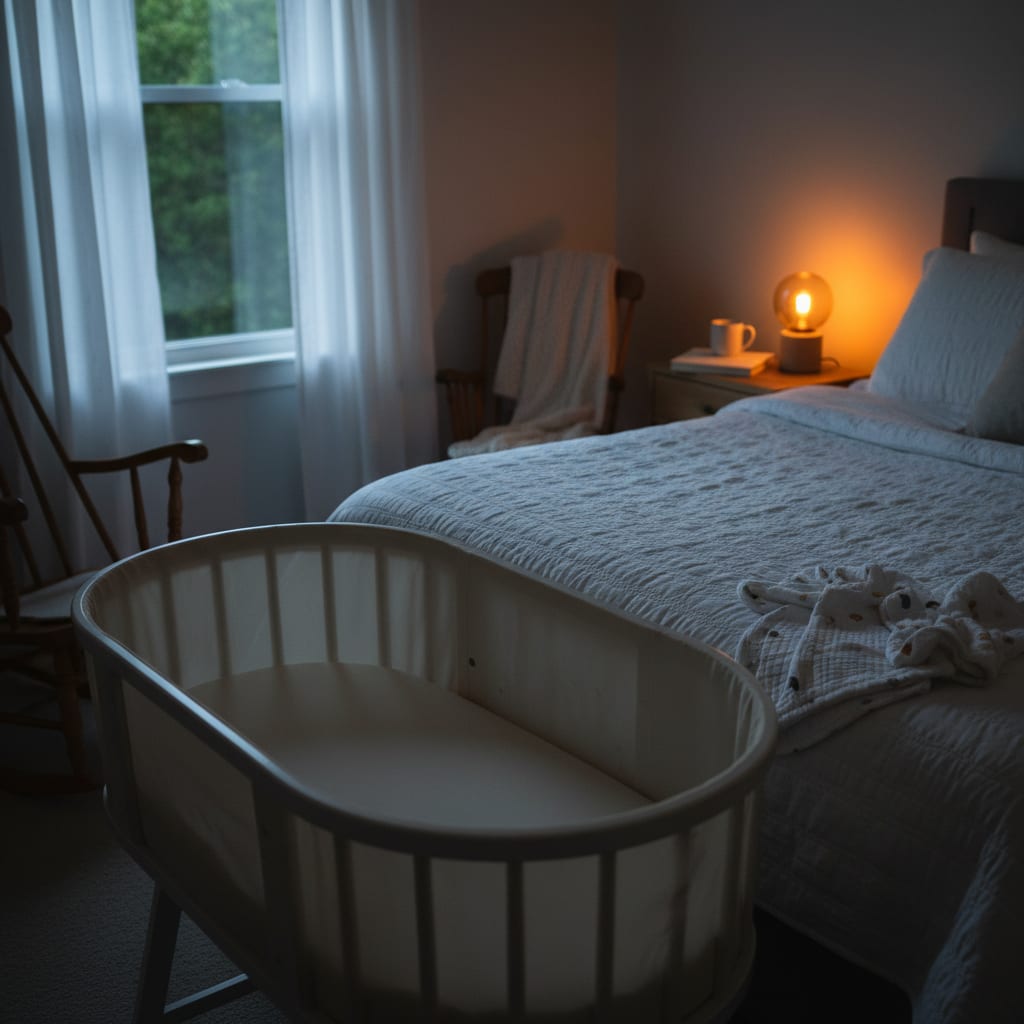
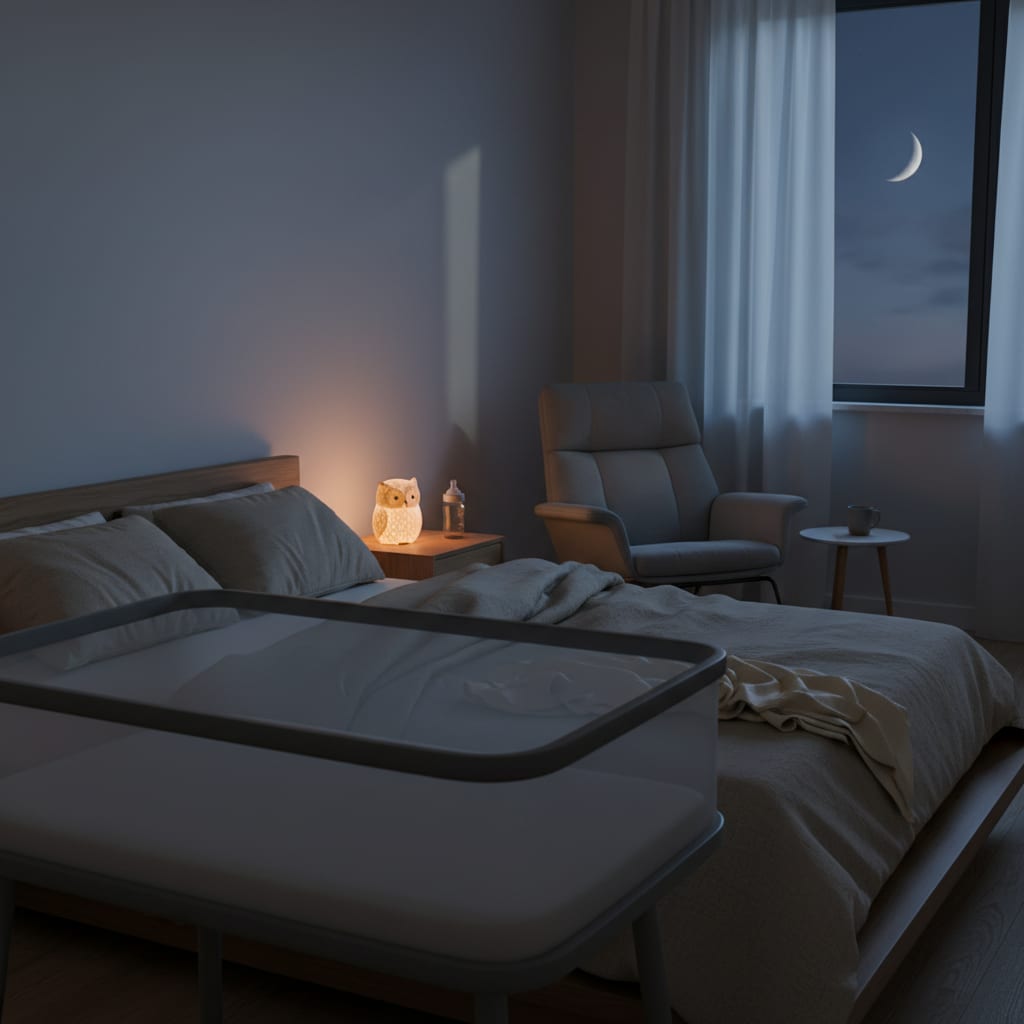
Do this at 4pm, not 11pm. Set the bassinet or crib up in your room, next to your bed — the American Academy of Pediatrics recommends room-sharing (not bed-sharing) for at least the first six months, and on night one it also saves your legs. Safe-sleep basics, which outrank every tip on the internet including mine: baby on their back for every sleep, on a firm flat mattress with a fitted sheet and nothing else in it — no blankets, pillows, bumpers or toys. A swaddle or sleep sack replaces blankets (a velcro-style one like the Halo SleepSack Swaddle is the easy 3am option).
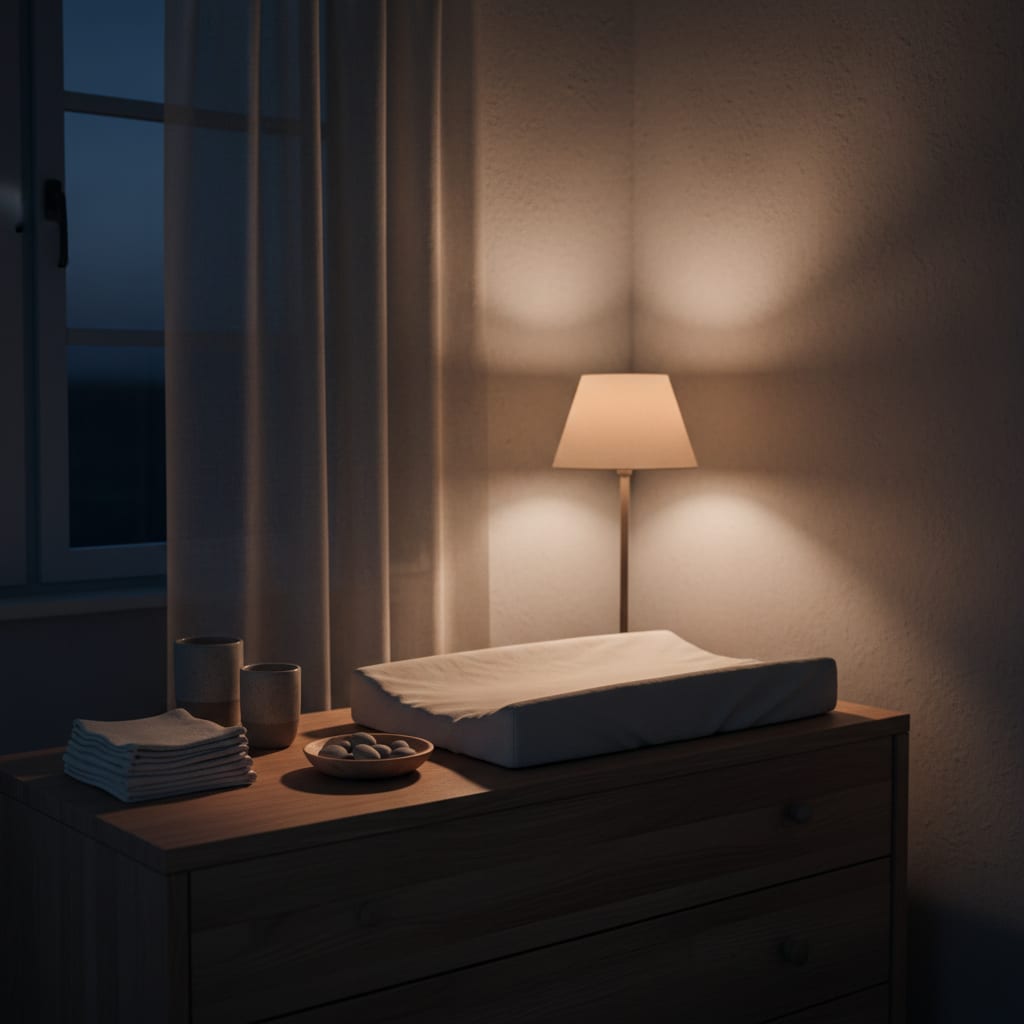
Then build two stations. A feeding station wherever you’ll feed: water, snacks, burp cloths, phone charger, dim lamp (a Hatch Baby sound machine-style light with a low amber setting works). A changing station within a few steps of the bed: diapers, wipes, two changes of baby clothes (you’ll use both), and a spare bassinet sheet for the inevitable 3am event. If you had a cesarean, engineer everything to minimize walking and stairs — week one after a c-section has its own logistics, and night one is when they matter most.
What the night actually looks like
Realistic expectations are the whole ballgame, so: newborns eat every two to three hours around the clock — timed from the start of one feed — and many bunch feeds even closer in the evening, which is cluster feeding and completely normal, not a milk-supply verdict. Many babies also arrive with days and nights flipped, so the night-one special is a baby who sleeps like a professional all evening and comes alive at 1am. Expect to be awake a lot; the wins are measured in ninety-minute stretches.
The newborn soundtrack surprises everyone: grunting, squeaking, snuffling, sighing and random single cries in their sleep. A noisy newborn sleeping on their back in a bare bassinet is a normal newborn. You do not need to check every squeak — I checked every squeak; don’t be me.
Run it in shifts, not in parallel
The classic night-one failure mode is both adults awake for everything, which produces two ruined people by dawn. Split the night: one of you owns 9pm–2am, the other 2am–7am. Whoever is off shift sleeps — actually sleeps, other room or earplugs — because a protected four-hour block is worth more than eight hours of shattered dozing. If you’re breastfeeding, the off-shift partner still owns diapers, burping and resettling, which is most of the labor anyway. Flying solo tonight? Then the rule is: sleep when the baby sleeps and let everything else fall where it falls — and remember it is always okay to put a crying baby down safely on their back in the bassinet and take five minutes to breathe.
The deeper pattern — how newborn sleep actually works and when it gets easier — is the subject of the newborn sleep survival guide, which picks up where night one leaves off. And if you want the “what do we do right now?” question answered by a plan instead of a 3am debate, this is exactly the job we ended up outsourcing to Betteroo: a personalized baby-sleep app that builds a gentle day-by-day plan for your actual baby and adapts as they grow. It won’t make night one easy — nothing makes night one easy — but starting with a plan beats starting with a search bar.
 Start with a plan, not a search bar
Betteroo builds a personalized, gentle day-by-day sleep plan for your baby — tonight included — and adapts it as they grow.
Take the 2-minute sleep quiz →
Start with a plan, not a search bar
Betteroo builds a personalized, gentle day-by-day sleep plan for your baby — tonight included — and adapts it as they grow.
Take the 2-minute sleep quiz →
Don’t forget: you’re a patient too
You gave birth extremely recently, and night one is early postpartum recovery as much as it is baby care. Take your pain meds on schedule instead of heroically forgetting them, keep a water bottle and enormous snacks at your station (night feeds produce a hunger that deserves respect), use the peri bottle, and watch your own warning signs — soaking a pad an hour, fever of 100.4°F/38°C or higher, severe headache, or a mood that’s frightening rather than weepy are OB calls, tonight, not notes for the six-week visit.
When to call the pediatrician (tonight, not at 9am)
Fever of 100.4°F / 38°C or higher (rectal) in a newborn is an immediate call, always. So are: refusing multiple feeds in a row or being too sleepy to feed; being unusually hard to wake; fewer wet diapers than the hospital told you to expect; labored breathing — grunting with every breath, flaring nostrils, ribs pulling in; any blue color around the lips; inconsolable crying that sounds wrong to your gut. Everything else — hiccups, sneezes, milk-drunk twitches, the entire farm-animal soundscape — keeps until morning. Nurse lines exist for the 3am “is this normal?” call, and they are staffed by people who chose that job.
FAQ: first night home
Why won’t my newborn sleep in the bassinet on night one?
Because they spent nine months in a warm, loud, moving room and the bassinet is none of those things. A snug swaddle, feeding to sleepy-full, and putting baby down drowsy but settled all help; so does patience. It genuinely improves within days.
Should we both stay up with the baby?
No — that’s the fastest route to two wrecked parents. Run shifts so each adult gets one protected block of sleep, and hand over at a fixed time like it’s a job site. The night gets dramatically more survivable.
How much will a newborn sleep the first night home?
Lots in total — newborns commonly sleep around 14 to 17 hours a day — but in fragments of one to three hours, frequently mistimed to your night. Total sleep is rarely the problem; the distribution is.
Is it normal to cry on the first night home?
Extremely — hormones crash right around homecoming, everything is enormous, and weepiness in these first days is the baby blues doing its standard thing. It should lift within a couple of weeks; if it deepens instead, call your OB. Meanwhile: you got through night one, and you’re doing fine.