When Can You Take a Newborn Out? A Sane Answer
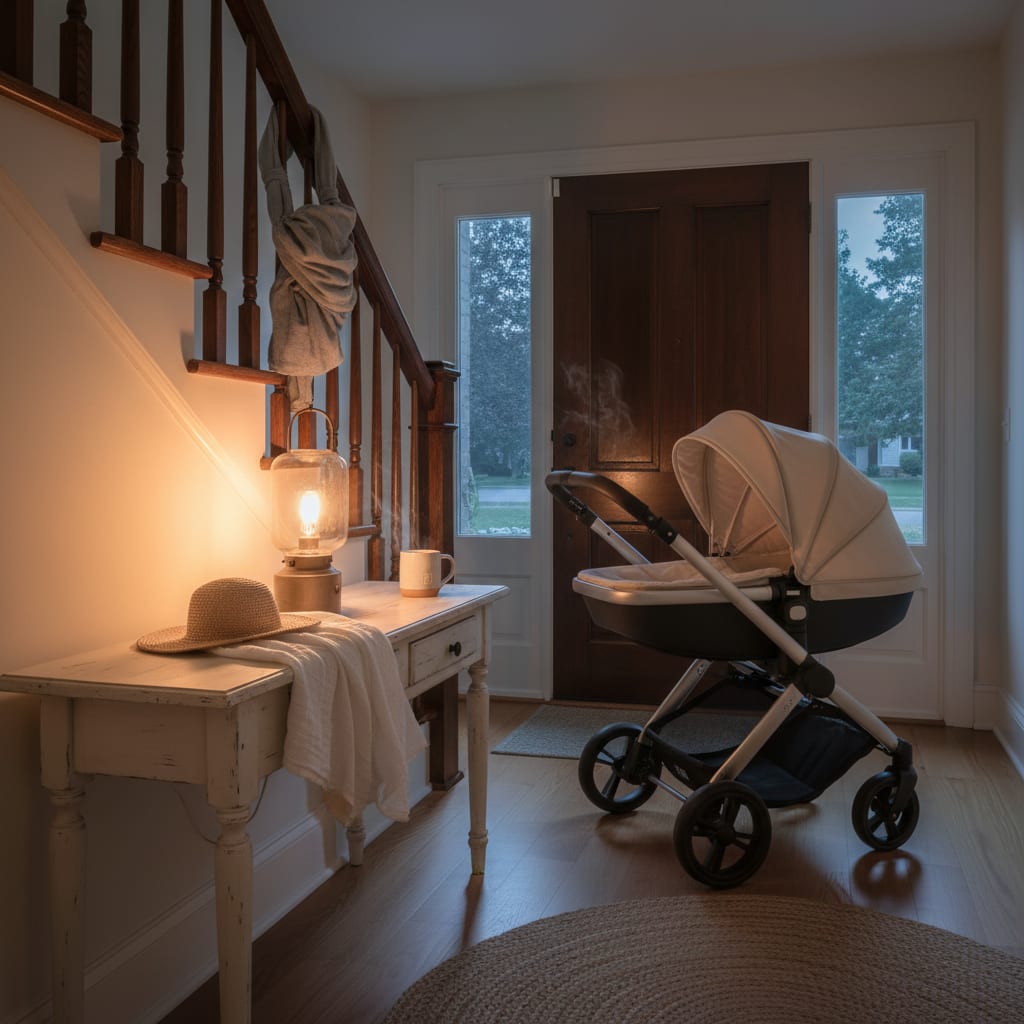
You can take a healthy, full-term newborn outside straight away — a walk around the block on day three is fine, and fresh air is good for both of you. There is no rule that a newborn must stay indoors for six weeks. What actually matters isn’t the outdoors; it’s exposure to people, because a newborn’s immune system is immature and a fever under three months is a medical emergency. So the real answer splits in two: outside, yes, early and often. Crowded indoor spaces and unwell visitors, no — and that caution has a genuine reason behind it.
Where the “six weeks indoors” idea comes from
Ask three relatives and you’ll get three different quarantine lengths, all delivered with total confidence. The number varies because the advice was never about the outdoors at all — it’s a garbled version of a real concern about infection risk in the first weeks.
Major guidance doesn’t set a house-arrest period. The AAP’s practical position is that outdoor air and walks are fine for healthy newborns, while unnecessary contact with crowds and sick people should be limited early on. Your pediatrician may add something specific if your baby was premature, small, has a heart or lung condition, or if you’re heading into a bad respiratory-virus season — and their advice outranks anything here or from your mother-in-law.
The reason for the caution is worth understanding rather than just obeying: in a baby under three months, a fever of 100.4°F (38°C) or higher triggers a serious workup, often including bloodwork and a hospital stay, because young infants can’t localise infection the way older babies do. Avoiding a crowded indoor space in week two isn’t superstition. It’s avoiding that afternoon.
What’s actually fine
- Walks, parks, gardens, the porch. Outdoor air disperses germs; a stroller on a quiet street is one of the lowest-risk places a newborn can be. It’s also one of the best things you can do for your own postpartum head.
- Necessary errands and appointments. Pediatrician visits are not optional, and a quick shop at a quiet hour is not reckless. Practical trips have always been part of newborn life.
- A small number of well, hand-washing, vaccinated people. Grandparents who are healthy and up to date on flu, COVID and Tdap are a different proposition from a party.
- Outdoor meet-ups. Coffee outside beats coffee inside by a wide margin.
- Leaving the house at all in the first week. The first night home is disorienting enough; getting out of the front door on day two or three is often the thing that makes the walls stop closing in.
What’s worth avoiding early
- Crowded indoor spaces — packed restaurants, busy indoor play areas, airports at peak, large family gatherings — especially during respiratory-virus season.
- Anyone with symptoms. No exceptions, no matter who they are or how far they’ve travelled. “It’s just a cold” is exactly the thing you’re avoiding.
- Passing the baby around a room. This is where most well-meaning risk lives. A carrier solves it politely: a baby worn on your chest in a wrap like the Moby Wrap is a baby nobody asks to hold, and it keeps her close, warm and calm through the whole outing.
- Kissing the baby, particularly on the face or hands. Worth saying out loud to visitors before they arrive, because most people won’t think of it and almost nobody is offended once you explain the fever rule.
Practical outing rules that actually help
Dress her in one more light layer than you’re wearing, and check her temperature at the back of her neck or her chest rather than her hands — newborn hands run cold and lie about it. Overheating matters as much as cold, so remove the extra layer once you’re indoors or in a warm car.
Keep the sun off her. Under six months, shade and clothing are the tools, not sunscreen — current guidance is to keep young infants out of direct sun and ask your pediatrician before applying sunscreen at that age. A stroller canopy plus a light muslin draped so air moves freely works; never cover a stroller with a heavy blanket that traps heat and blocks airflow.
Watch the car seat clock. Babies shouldn’t spend long stretches in a car seat outside the car, because the semi-upright position can affect breathing in young infants. Move her to a flat surface or a carrier when you arrive rather than leaving her in the seat for hours, and never leave a baby unsupervised in a car seat.
Accept that naps on the go are still naps. Sleep will be lighter and more chaotic in a stroller than in a bassinet, and that’s a fair trade for a walk. What doesn’t travel is the safe-sleep floor: for real sleep, back, own flat firm surface, nothing else in it. If you’re trying to protect a fragile daytime rhythm, Betteroo’s take on building a newborn day that survives outings is a sane place to start.
Pack for the feed, not the fantasy. Whatever feeding looks like for you, plus twice the diapers you think you need and a full change of clothes for you both. The rest is optional.
Go somewhere with a low exit cost. The first few outings should be things you can abandon in ninety seconds without disappointing anyone.
Call the pediatrician if…
After any outing — and generally in the newborn months — call for: fever of 100.4°F (38°C) or higher in a baby under three months, which is urgent at any hour; unusual sleepiness, floppiness, or difficulty rousing; feeding that weakens or stops, or fewer wet diapers than her normal; labored breathing — fast, grunting with each breath, ribs pulling in — or blue lips or face; a cough, wheeze, or persistent congestion that interferes with feeding or sleeping; a rash that doesn’t fade when pressed; or your gut saying she’s off. If you know she was around someone who turned out to be unwell, that’s worth a call before symptoms rather than after, especially in the first weeks. This is what pediatric nurse lines exist for, and no one on the other end will think you overreacted.
FAQ: taking a newborn out
Can I take my newborn outside in the first week?
Yes, if she’s healthy, full-term and your pediatrician hasn’t said otherwise. A short walk in fresh air is fine from the early days — including in the disorienting stretch right after the first 24 hours. It’s crowded indoor spaces and unwell people that warrant caution, not the outdoors.
When can I take a newborn to a restaurant or a store?
Quiet times are reasonable early on; packed indoor spaces are best left until later, especially in respiratory-virus season. Many families ease up noticeably after the two-month vaccines, but there’s no hard switch — ask your pediatrician what makes sense for your baby and the season.
How should I dress my newborn for going out?
One more light layer than you’re comfortable in, and check the back of her neck or chest to judge temperature rather than her hands. Remove layers indoors and in the car to avoid overheating, and keep her out of direct sun with shade and clothing rather than sunscreen.
Is it safe for people to hold my newborn?
Healthy, hand-washing, up-to-date-on-vaccines people, yes — one at a time, and not while the baby is being passed around a room. Ask anyone with symptoms to visit later, and ask everyone to skip kissing her face and hands. It’s a normal request, and it protects her from a very unpleasant few days. You’re doing fine.