Your 2-Month-Old Baby: Shots, Smiles and Longer Nights
A 2-month-old baby is recognisably a person. The crying peak is behind you, real social smiles are here or nearly here, cooing starts, and most babies begin stringing together one genuinely longer stretch of night sleep. This is also the month of the two-month well visit, which brings a growth check, a development review and the first big round of vaccines — the single most useful appointment of the newborn era. Month two is where the fog thins. Here’s what’s normal, what changes, and what’s worth a call.
The two-month checkup (and the shots)
The two-month well visit is a real appointment with a real agenda: weight, length and head circumference plotted on the growth curve, a head-to-toe exam, questions about feeding and output, a look at hearing and vision responses, and the first substantial round of immunizations per the CDC schedule.
Two things worth knowing before you go. First: bring your questions written down, because you will forget every one of them the moment someone asks how feeding is going. Anything you’ve been quietly worrying about since week six belongs on that list — this is the appointment it was saved for.
Second: the shots. Most babies are fussy and sleepy for a day or two afterward, sometimes with a sore leg or a low-grade temperature. Your pediatrician will tell you exactly what to expect, what to watch for, and whether and how to use any fever medicine — dosing at this age is theirs to give, not the internet’s, and never eyeballed. Plan a nothing day after the appointment. Extra feeding, extra holding, no errands, no expectations.
Smiles, coos and a whole new person
The two-month personality upgrade is dramatic. Social smiles — awake, eye contact, aimed at you and repeatable — usually land somewhere between six and eight weeks, and by the end of month two most babies smile back reliably. Then the sound arrives: open vowels, gurgles, and the deeply strange experience of your baby starting to coo back at you like a conversation.
Alongside that: she tracks objects past the midline of her face, turns toward voices, holds her head up for longer stretches during tummy time, and pushes her arms and legs out with more control and less startle. Alert windows lengthen, which means more awake time that isn’t crying — genuinely new territory after the newborn weeks.
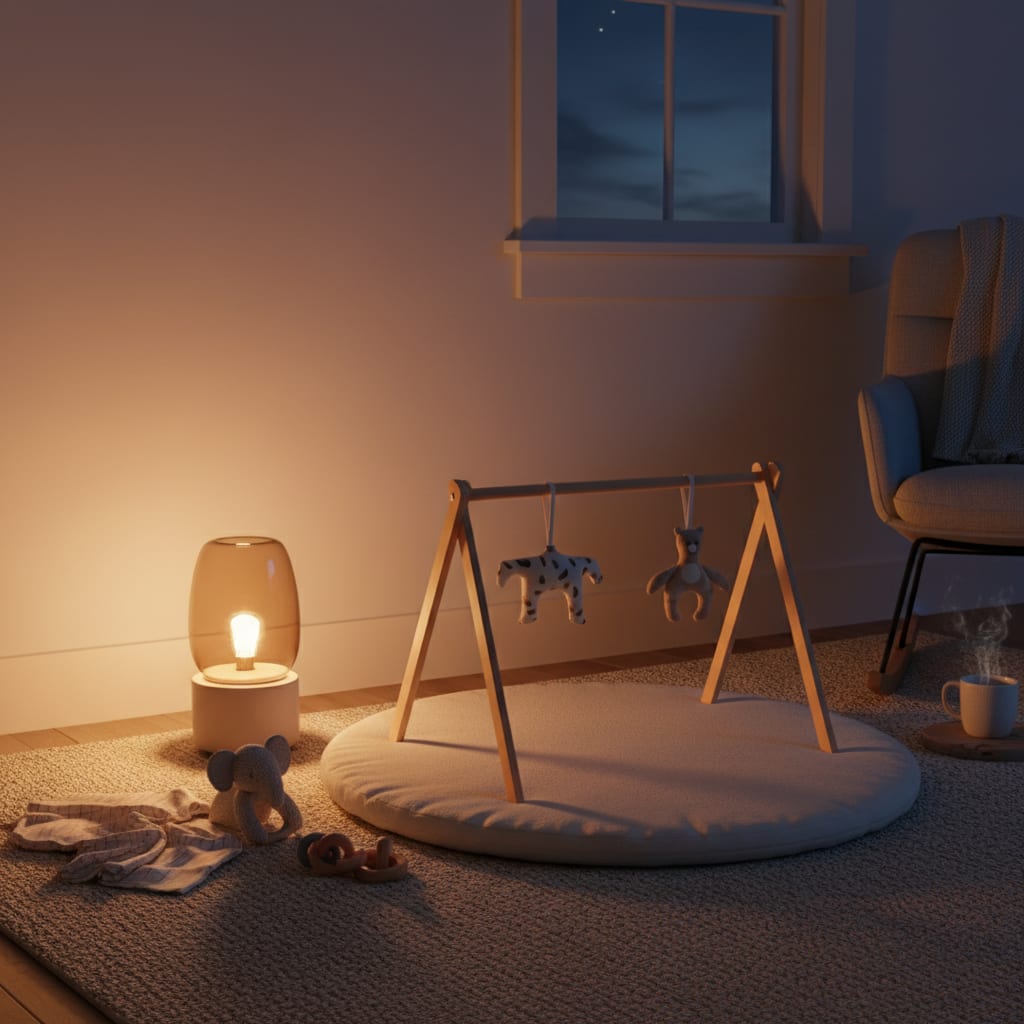
Play at this age is unfussy: your face, your voice, a slow-moving high-contrast object, and floor time. If you want one thing on the floor rather than a pile of things, a simple gym mat with hanging toys like the Skip Hop 3-in-1 Activity Gym does the job for both back-play and tummy time, and stays useful for months. Supervised tummy time, awake and on a firm flat surface, remains the highest-value five minutes of the day.
Feeding at two months
Feeds usually get faster and more efficient — a baby who took forty-five minutes at three weeks may finish in twenty. Frequency starts stretching too, though “every two to three hours” is still a completely normal rhythm, and a spell of growth-spurt feeding can reset the clock overnight without meaning anything is wrong.
Your reassurance scoreboard is unchanged and still the only one that matters: steady wet diapers, a baby who settles after feeds, and a growth curve your pediatrician is happy with. Stool patterns often change around now — breastfed babies in particular may go from many small stools a day to one every few days — which is common at this stage but always worth mentioning at the visit rather than diagnosing at home.
Sleep at two months
Two-month sleep is the first stretch where the word “pattern” isn’t wishful thinking. The circadian rhythm keeps maturing, day-night confusion is usually resolved or resolving, bedtime starts drifting earlier and more consistent, and many babies produce one longer night stretch — four, five, sometimes six hours — before returning to their usual overnight feeds. Total sleep still lands somewhere in the fourteen-to-seventeen-hour range across a day, taken in wildly variable chunks.
What it is not: sleeping through the night. Night feeds at two months are normal and expected, and how long a baby of this age can safely go between feeds is a pediatrician question tied to weight and growth, not a target from a book.
Naps stay short and unpredictable. That’s the age, not a failure of technique. Keep the day cues loud — bright, social, out-and-about days; dark, dull, transactional nights — and keep the safe-sleep floor immovable: on her back, in her own bare bassinet or crib, firm flat surface, nothing else in it, per the AAP, every single sleep. The newborn sleep survival guide has the full playbook, and Betteroo’s two-month sleep schedule shows what a typical day can look like if you want a shape to aim at rather than a rule to fail.
 Two months in — sleep finally has a shape
Betteroo builds a personalized, gentle day-by-day sleep plan for your baby's exact age and adapts it as she grows.
Take the 2-minute sleep quiz →
Two months in — sleep finally has a shape
Betteroo builds a personalized, gentle day-by-day sleep plan for your baby's exact age and adapts it as she grows.
Take the 2-minute sleep quiz →
Call the pediatrician if…
Call for: fever of 100.4°F (38°C) or higher — still urgent at this age, any hour, including a fever after vaccines that your pediatrician’s post-shot advice didn’t cover; a baby who is much harder to rouse than usual, floppy, or unusually limp; feeding that weakens or stops, or fewer wet diapers than her normal; labored breathing — fast, grunting with each breath, ribs pulling in — or blue lips or face; forceful projectile vomiting, or vomit that’s green or bloody; crying that’s high-pitched, pained, or truly inconsolable and unlike her; no social smiling, no eye contact and no response to your voice by the end of month two (raise it at the visit — it’s a review, not a verdict); or the unbeatable “she seems off,” which pediatric nurse lines exist for. And for you: a mood that stays dark or frightens you is a same-day call to your OB or the PSI helpline, not a someday item.
FAQ: your 2-month-old
Should a 2-month-old sleep through the night?
No. Night feeds at two months are normal, and most babies still wake at least once or twice. The realistic win at this age is one longer stretch early in the night. How long your baby can safely go between feeds is a question for your pediatrician, who knows her weight and growth.
How long should a 2-month-old be awake between naps?
Alert windows are usually short — often somewhere around an hour to an hour and a half, and highly individual. Watch your baby rather than the clock: yawning, glazed staring and jerky movements mean the window is closing, and an overtired baby is much harder to settle than an early one.
Is it normal for a 2-month-old to be fussy after vaccines?
Fussiness, extra sleepiness, a sore leg and a low-grade temperature for a day or two are common reactions your pediatrician will brief you on. Follow their instructions on fever medicine and call them — not a search bar — if the reaction seems bigger than what they described.
What comes after two months?
More of the good part. Month three brings sturdier head control, hands discovered as toys, laughing, and sleep that keeps consolidating — your 3-month-old is where most first-time parents finally feel the fog lift. Same floor as always: feed on cue, sleep safe, lower the bar. You’re doing fine.