Postpartum Night Sweats: Why You Wake Up Soaked
Postpartum night sweats — waking up drenched, sheets and all, in the days and weeks after giving birth — are common, hormonal, and temporary. After delivery, estrogen and progesterone drop steeply, and your body is also offloading the extra fluid it stockpiled during pregnancy; sweating (along with a lot of trips to the bathroom) is one of the main exits. They’re usually most intense in the first week or two and taper off over several weeks. The one important caveat: sweating with a fever — 100.4°F / 38°C or higher — is not a night sweat, it’s a call to your OB. A thermometer like the Braun Digital Thermometer on the nightstand; here’s everything else.
Why your body is doing this
Two systems are running at once. First, the hormone cliff: the moment the placenta is delivered, the pregnancy hormones that ran the show for nine months fall off steeply, and that drop scrambles your internal thermostat for a while — the same general mechanism behind hot flashes at menopause, which is why the 3am experience feels weirdly similar to what your mother describes. If you’re breastfeeding, estrogen stays suppressed longer, which is why nursing moms often report sweats hanging around longer too. Totally normal either way.
Second, the great fluid unload. During pregnancy your blood volume expands substantially, and any IV fluids from labor or a cesarean add to the tank. All of that has to leave, and your body’s exits of choice are urine and sweat. That’s why the soaked-sheets phase clusters in the first week or so, exactly when you’re also peeing constantly and watching your ankles reappear — it’s drainage, not dysfunction.
Waking up drenched at 3am, heart thumping, convinced something is wrong, is a classically alarming experience of a completely mundane process. It sits in the same “nobody warned me” bucket as most of early postpartum recovery — dramatic-feeling, standard-issue.
How long it lasts
Most people find night sweats peak in the first one to two weeks and fade over roughly two to six weeks, tracking the fluid unload and the hormone re-settling. Breastfeeding can stretch a milder version out longer — some nursing moms notice occasional flashes and damp nights for months, often flaring around feeds (oxytocin does strange things to thermostats). The trend is what matters: gradually less frequent, gradually less soaking. Sweats that are getting worse week over week, or that continue drenching-level for months, are worth mentioning to your OB — not because something is likely wrong, but because a quick check (thyroid, for instance, can wobble postpartum) is easy and settles the question.
What actually helps at 3am
You can’t switch the process off, but you can make it much less miserable:
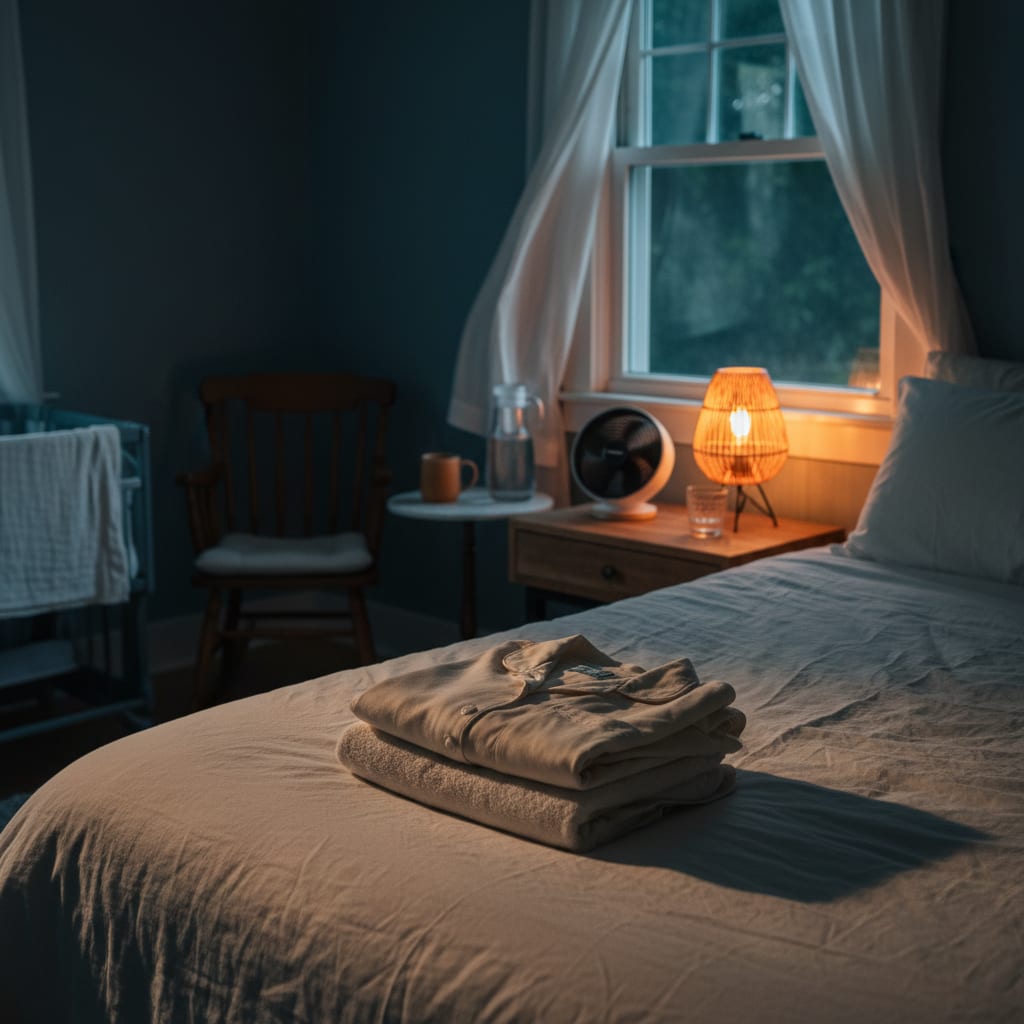
- Layer the bed like you mean it. A waterproof mattress protector like the SafeRest, then a towel or absorbent pad over the sheet on your side. At 3am you peel away the damp towel instead of changing the whole bed with a newborn in one arm. (I resisted the towel move for a week out of some misplaced dignity. Surrender immediately.)
- Dress in cotton, sleep in spares. Breathable cotton or bamboo sleepwear, and a folded spare set plus a spare pillowcase within reach. The 3am change takes ninety seconds when it’s pre-staged — the same station logic as night one, because everything about early postpartum goes better pre-staged.
- Cool the room, warm the option. Fan on low or window cracked, with a light blanket available — post-sweat chill is real and unpleasant.
- Drink more water, not less. Counterintuitive but important: the sweating happens regardless, and you’re likely also feeding a baby with your body. Cutting fluids just adds dehydration (headaches, dizziness, grumpier everything) to the party. Water bottle on the nightstand, refilled at every feed.
- Shower without guilt. A quick rinse counts as self-care and hygiene arithmetic. Plain water is fine; your skin has been through enough.
Call your OB if the sweats come with…
- Fever — 100.4°F / 38°C or higher. This is the big one: sweating from a fever can masquerade as night sweats, and fever in the postpartum weeks needs a same-day conversation because infection (uterine, incision, breast) is a real possibility. When you wake up soaked, take your temperature — it’s the thirty-second test that separates “hormones” from “phone call.”
- Chills that rattle, or feeling genuinely ill rather than just damp;
- Foul-smelling discharge, heavy bleeding (soaking a pad an hour), or a wound that’s increasingly red, hot or leaking — see the full warning-sign list in the week-by-week recovery guide;
- A painful, hot, red area on one breast plus flu-like feelings — that pattern needs a same-day call too;
- Sweats still at full drench past a couple of months, or getting worse instead of better;
- Racing heart, tremor, or anxiety that won’t settle — easy to check, worth checking.
None of these mean panic; all of them mean “this is what the office line is for.”
FAQ: postpartum night sweats
How long do postpartum night sweats last?
Typically they peak in the first week or two and taper over roughly two to six weeks. Breastfeeding moms often notice a milder version for longer. Sweats that worsen over time or persist for months at full intensity are worth a mention to your OB.
Are night sweats a sign of infection after birth?
Sweating alone, no — with fever (100.4°F/38°C or higher), chills, foul-smelling discharge, or a red, hot incision, possibly, and that combination is a same-day call. Keep a thermometer by the bed and let it referee.
Do night sweats mean my milk supply is affected?
No — night sweats are about estrogen dropping and extra fluid leaving, not about supply. Just compensate for the fluid loss by drinking to thirst and then some; feeding a baby and sweating through sheets are both thirsty work.
Can I take anything to stop postpartum night sweats?
There’s no switch-off pill — time does the fixing. Cooling the room, breathable layers, hydration and pre-staged spare pajamas manage the meantime, and anything persistent or worsening deserves an OB conversation rather than a supplement aisle. Damp, tired and completely normal — you’re doing fine.