Newborn Sneezing a Lot? Why It's Usually Fine
A newborn who sneezes constantly is almost always doing something completely ordinary: clearing tiny nasal passages that clog with dust, lint, milk and leftover amniotic fluid, using the only tool she has. Newborns can’t blow their noses or clear their throats, so sneezing is their entire respiratory housekeeping department, and it runs often. Frequent sneezing on its own — in a baby who feeds well, breathes comfortably and has no fever — is not a cold, not an allergy and not a sign of anything. The sneezing that matters is the kind that arrives with other things. Here’s how to tell.
Why newborns sneeze so much
The passages are minuscule. A newborn’s nasal airways are narrow enough that a speck of dust, a thread from a swaddle, or a smear of milk creates a genuine obstruction. Sneezing is the only way she has to shift it.
She’s still clearing out birth. In the first days, some babies sneeze their way through residual amniotic fluid and mucus. It’s part of the same clean-up that produces all the other odd noises of the first hours and days.
Newborns breathe through their noses. That’s how they feed — nose breathing while latched is the design. So any nasal blockage gets addressed immediately and loudly, and sneezing is the front-line response.
Ordinary air is full of stuff. Dry indoor air, dust, fragrance, cooking smells, and above all smoke or vape residue will all set a newborn off. Smoke exposure is worth eliminating entirely — it’s linked to real risks in infants, not just sneezing.
Bright light does it too. Some babies sneeze when they move from dim to bright, a harmless reflex that also runs in families and is fun to catch.
None of this means a cold. Colds in newborns come with a package — congestion that persists, feeding trouble, fever, cough, a baby who seems unwell — and sneezing is a bit-part player, not the lead.
Normal vs call the pediatrician
| Usually normal | Call the pediatrician |
|---|---|
| Bursts of sneezing through the day in an otherwise content, well-feeding baby | Fever of 100.4°F (38°C) or higher under three months — urgent, any hour |
| Sneezing with occasional snuffles and easy, comfortable breathing | Fast or labored breathing; nostril flaring; ribs or the notch at the throat pulling in |
| A sneeze or two after a feed, a nappy change, or moving into bright light | Grunting with every breath, or pauses in breathing |
| Clear, thin nasal moisture with no other symptoms | Thick, coloured, or persistent nasal discharge, especially with congestion that won’t shift |
| Sneezing that stops as fast as it started | Congestion that interferes with feeding — refusing the breast or bottle, or coming off gasping |
| Snuffly sounds during sleep with normal colour and normal feeding | Pale, gray or bluish colour — lips, face or tongue (urgent, any hour) |
| — | Cough, wheeze, unusual sleepiness, floppiness, or fewer wet diapers |
| — | Your gut says she seems off — always a sufficient reason to call |
Nurse lines are staffed for exactly this call. Nobody there considers “she’s sneezing and I’m not sure” a waste of their time — particularly in the under-three-months window, where the threshold for being seen is deliberately low.
What helps (and what to leave alone)
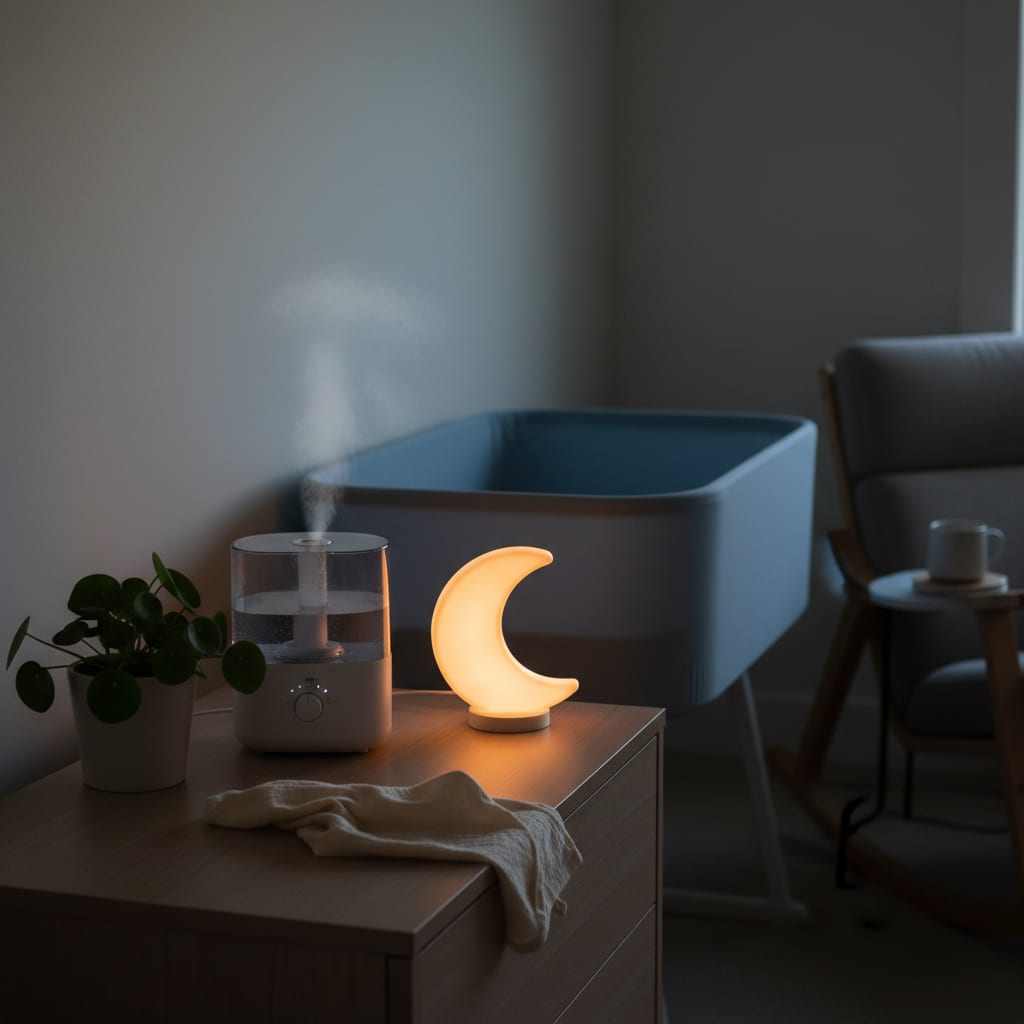
Fix the air before you fix the baby. Vacuum and dust the room she sleeps in, wash new blankets and swaddles before use, drop scented plug-ins and heavy fragrances, and keep the house strictly smoke-free. Dry heated or air-conditioned air is a common culprit; a cool-mist humidifier such as the Crane Drop helps if your air is genuinely dry — cleaned and refilled daily with fresh water, because a neglected humidifier becomes a problem of its own. Betteroo’s rundown of what actually matters in a baby humidifier is a useful sanity check before you buy anything.
Leave her nose alone unless it’s actually blocked. Sneezing is not congestion, and a nose that’s doing its job doesn’t need help. If there is genuine blockage affecting feeding or sleep, saline drops and gentle suction with something like the NoseFrida are the standard tools — but check with your pediatrician first at this age, and don’t suction repeatedly, which irritates the lining and makes things worse.
Nothing goes in a newborn. No over-the-counter cold or cough medicine, no decongestants, no vapour rubs, no essential oils, no honey. Cold medicines aren’t for babies, and dosing decisions in the newborn months belong to your pediatrician alone.
Expect noise. A snuffly, sneezy, grunty newborn is the standard model — the same soundtrack that produces all the grunting and squeaking that keeps first-time parents hovering over the bassinet. Comfortable breathing and good feeding are what you’re actually watching, not volume.
Watch the trend, not the moment. A sneezy day in a happy baby is nothing. A baby who is sneezier and snufflier and feeding worse than yesterday is a different picture — that direction of travel is the thing to call about.
FAQ: newborn sneezing
Is it normal for a newborn to sneeze a lot?
Yes. Frequent sneezing is the standard newborn method for clearing tiny nasal passages of dust, lint and milk, and it’s especially common in the early weeks. On its own, in a baby who is feeding well and breathing comfortably with no fever, it isn’t a sign of illness.
Does sneezing mean my newborn has a cold?
Usually not. A cold typically brings persistent congestion, feeding trouble, cough, and often fever — and any fever of 100.4°F (38°C) or higher under three months needs urgent medical attention. Sneezing alone, without that package, is routine housekeeping.
Can newborns have allergies?
Environmental allergies are uncommon in the newborn months — the immune system generally needs longer exposure to develop them. Irritants such as smoke, fragrance, dust and dry air are the far more likely explanation. Persistent symptoms, rashes or feeding reactions are worth raising with your pediatrician rather than self-diagnosing.
How long does newborn sneezing last?
It usually eases over the first couple of months as the nasal passages grow and the airway matures, though occasional sneezing bursts continue through the early weeks and beyond. If sneezing is worsening rather than fading, or arriving with congestion, cough or feeding trouble, that’s a call. You’re doing fine.