Your 8-Month-Old Baby: Pulling Up and Clinging On
An 8-month-old baby is two things at once: newly vertical and newly worried about you. Pulling up on furniture often starts this month, babbling turns into long consonant strings, and meals settle into something resembling three a day. At the same time she may start crying when you leave the room, panicking at strangers she liked last week, and waking at night for reasons that have nothing to do with hunger. Both are development, not regression. Here’s what’s normal at eight months.
Eight months: up on everything
The honest framing again: there is no CDC eight-month checklist — the first-year checklists land at 2, 4, 6, 9 and 12 months. So eight months is the run-up to the nine-month list, which covers sitting without support, getting to a sitting position by herself, moving things from one hand to the other, banging two things together, raking food toward herself with her fingers, looking when you call her name, babbling long strings like “mamamama”, showing several different facial expressions, and reacting when you leave the room.
Pulling to stand is the eight-month headline, and it’s worth knowing that the CDC lists “pulls up to stand” on its twelve-month checklist — meaning the 75% mark sits four months from now, and a baby who isn’t hauling herself up on the coffee table this month is squarely inside normal. Some do it at seven months, some at eleven. Betteroo’s eight-month milestone guide covers the same window.
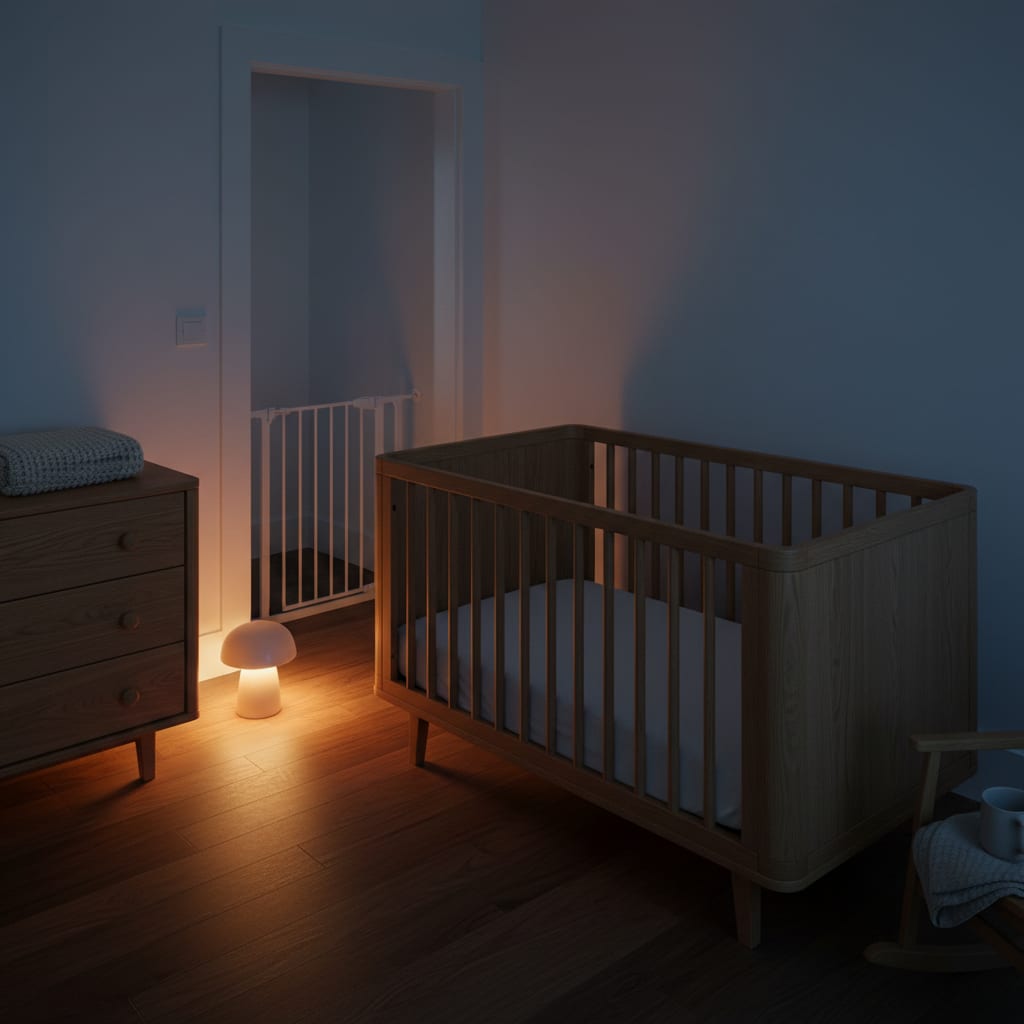
What is not optional is the house. Once a baby can pull up, everything at standing height is reachable and everything unanchored is a handhold: bookcases, dressers and televisions get strapped to the wall, tablecloths come off, hot drinks move to the back of the counter, and stairs get a gate at the top and the bottom. A pressure-mounted walk-through gate like the Regalo Easy Step covers most doorways, though the top of a staircase should always take a hardware-mounted gate rather than a pressure one. Lower the crib mattress this month if you haven’t — a baby who pulls up in a high crib is a fall waiting for a witness.
Separation anxiety arrives
Somewhere in the eight-to-ten-month range, most babies work out that you continue to exist when you walk out of the room — and that they can’t do anything about it. That realisation is what separation anxiety is. The baby who cheerfully went to anyone at five months now clamps onto your shoulder and screams at her own grandmother.
It is a cognitive milestone wearing a very convincing disguise as a problem — and a strange one to meet in the same baby who, at three months, would smile at a lamp. It also passes, and how you handle it matters less than most parenting content implies. The things that genuinely help are small: leave rather than sneaking out, say a short goodbye and use the same words every time, keep the handover brisk, and come back when you said you would. Practise tiny separations at home — go to the next room, talk from there, come back. Peek-a-boo is the same lesson in game form, which is why it suddenly gets hilarious this month.
At night, separation anxiety is the single most common reason an eight-month-old who was sleeping starts waking again. Betteroo’s piece on how separation anxiety plays out at night is a level-headed account of what to expect.
Sleep at eight months
Total sleep still sits in the twelve-to-sixteen-hour range across a day including naps, per the guidance the AAP endorses, most commonly a long night plus two naps — many babies drop from three naps to two somewhere between six and nine months, and the transition itself is bumpy.
The eight-month wakings usually have a cause you can name: separation anxiety, a new physical skill being rehearsed at 2am, teething, or a nap transition mid-collapse. A baby who pulls to stand in her crib and then can’t work out how to get back down will stand there and cry about it — the fix is practising sitting down from standing on the floor in daylight, repeatedly, not going in at night to lower her forty times.
Whether an eight-month-old still needs a night feed varies genuinely, and it’s a growth-and-weight question for your pediatrician rather than a milestone. The safe-sleep floor is unchanged and stays unchanged until her first birthday: on her back to start, own bare crib, firm flat surface, nothing else in it, no pillows, no loose blankets, no bumpers.
 Eight months — and she wakes the moment you leave
Betteroo builds a gentle, personalized sleep plan around your baby's real age and rhythm, and keeps adapting it as she grows.
Take the 2-minute sleep quiz →
Eight months — and she wakes the moment you leave
Betteroo builds a gentle, personalized sleep plan around your baby's real age and rhythm, and keeps adapting it as she grows.
Take the 2-minute sleep quiz →
Feeding at eight months
Most eight-month-olds are on roughly three small meals a day plus milk feeds, and milk — breast, formula, or both — is still supplying the larger share of nutrition right through to twelve months. Solids are still adding to that rather than replacing it.
The eight-month development is the pincer grasp beginning to form, which means finger foods get genuinely useful: soft strips and small soft pieces she can pick up herself, alongside whatever mash or puree you’re doing. Self-feeding is slow, filthy and worth it. Keep offering common allergens regularly rather than introducing them once and stopping, and keep the first-year rules exactly where they were: no honey before twelve months in any form, and no choking hazards — whole grapes, nuts, seeds, popcorn, chunks of meat or cheese, raw hard vegetables. She eats upright, supervised, never in a car seat or bouncer.
A cup of water with meals is normal at this age; how much is a pediatrician question. Cow’s milk as a drink still waits until twelve months, though dairy in food — yogurt, cheese — is fine and is part of the allergen picture. The texture progression from the seven-month post keeps going: eight to ten months is when lumps and soft finger foods should be widening, not narrowing.
Call the pediatrician if…
Call for: a fever of 100.4°F (38°C) or higher; a baby much harder to rouse than usual, floppy, or unusually limp; milk intake or wet diapers dropping below her normal; labored breathing — fast, grunting, ribs pulling in — or blue lips or face; hives, facial swelling, vomiting or wheezing after a new food (call 911 for breathing difficulty or swelling of the face or mouth); vomit that’s green or bloody; not sitting without support at all, or sitting and rolling that seem to have gone backwards; no babbling, no response to her name, no response to sounds; no interest in the people around her; a body that stays stiff or floppy; a strong persistent preference for one hand or one side; or the reliable “she seems off.” Everything smaller belongs on the list for the nine-month visit. And for you: a mood that stays dark, or that frightens you, is a same-day call to your OB or the PSI helpline — the first year does not have an expiry date on that.
FAQ: your 8-month-old
When do babies pull up to stand?
There’s a wide normal spread. Many babies start somewhere in the eight-to-ten-month range, and the CDC puts “pulls up to stand” on its twelve-month checklist as the point most babies have got there. A baby who hasn’t started at eight months is not behind — but her crib mattress should still be lowered before she does.
Is separation anxiety at 8 months normal?
Yes, and it’s a cognitive milestone rather than a problem: she has understood that you exist when she can’t see you. It typically shows up between eight and ten months and eases over the following months. Short consistent goodbyes and reliable returns help more than avoiding separations does.
How much should an 8-month-old eat?
Roughly three small meals a day plus milk feeds is common, but appetite swings hugely day to day and there is no correct number of spoons. Breast milk or formula still provides the bigger share of nutrition until twelve months. The measure that matters is your pediatrician’s growth curve.
What comes after eight months?
The nine-month checkup and a formal development review — the first structured checkpoint since half a year. Look back at the six-month post and note that she couldn’t sit unaided then. Two months, and she’s standing. You’re doing fine.