Fourth Trimester Survival: Getting Through 12 Weeks

Surviving the fourth trimester is a logistics problem, not a parenting problem. The first twelve weeks after birth aren’t something you get good at — they’re something you get through, and the families who come out least wrecked are the ones who set up systems early: who takes which night shift, what the minimum acceptable day looks like, how help gets used, and what the warning signs are for both of you. Nobody thrives here. Everybody survives here. Here’s the operational version, from someone who over-planned the wrong things.
Build the night before you need it
Night is where the fourth trimester is won or lost, and the biggest lever isn’t the baby — it’s how the adults divide the dark hours.
Split the night into shifts, not turns. Alternating wake-ups sounds fair and destroys both of you: two half-slept people is worse than two people who each got one protected block. The version that works for most families is a hard split — one adult owns everything until roughly 2am while the other sleeps somewhere they genuinely won’t hear the baby, then they swap. Even four uninterrupted hours changes what kind of person you are the next day.
Make the shift possible. If you’re breastfeeding, the off-duty parent can still take every change, burp and resettle, and one bottle of expressed or formula milk per night — a decision to run past your pediatrician or lactation support if feeding is still establishing — buys the nursing parent one real sleep block. If you’re bottle-feeding, there’s no reason both of you should ever be awake at once.
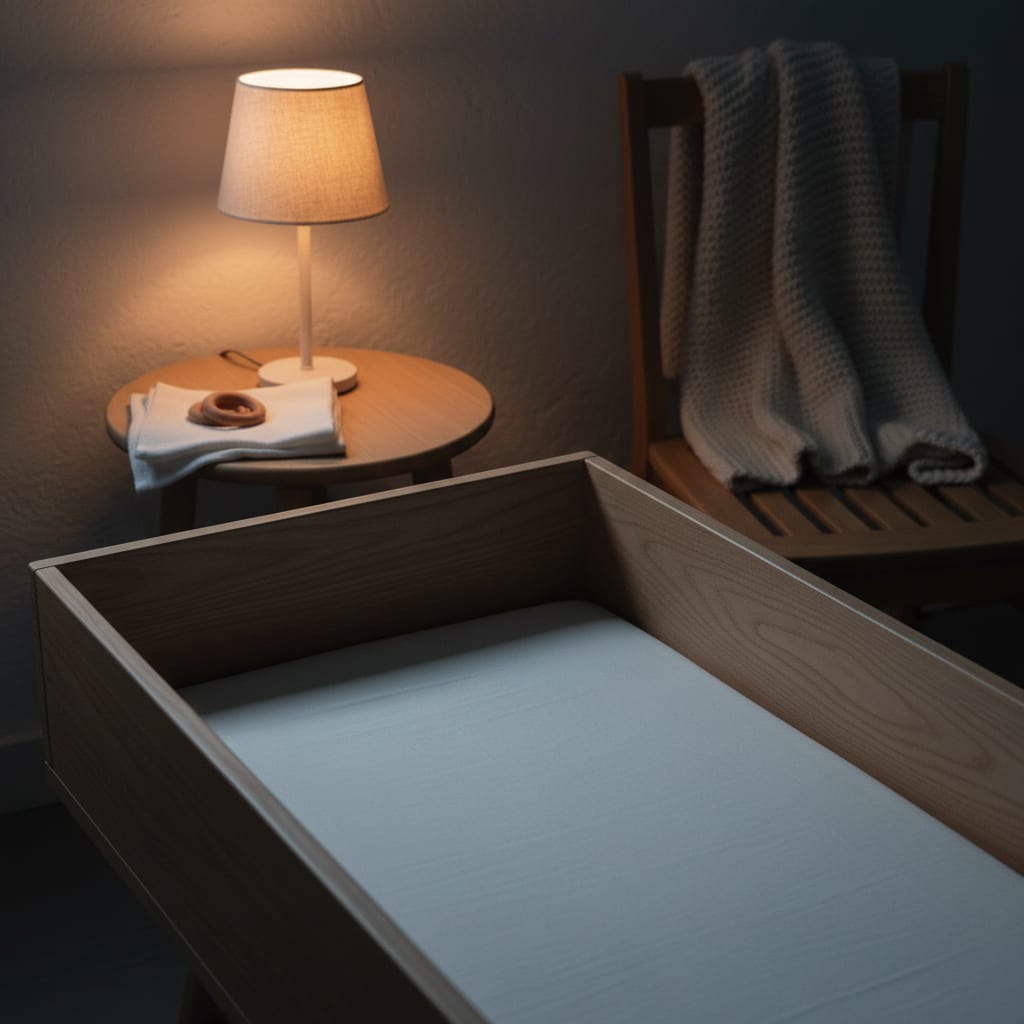
Pre-stage everything within arm’s reach. Diapers, wipes, a change of clothes for her and for you, water, snacks, burp cloths, a dim light. Every item you have to walk for at 3am costs twenty minutes of sleep on the far side of it.
Keep the room boring and consistent. Dim, cool, same every time. Continuous white noise from something like the Yogasleep Dohm, placed well away from the bassinet and kept at a low volume, covers the household noises that wake a lightly-sleeping newborn. The sleep floor never moves: on her back, in her own bare bassinet or crib, firm flat surface, nothing else in it, every sleep, per the AAP. The full night-time playbook lives in the newborn sleep survival guide.
Have a plan for the moment it’s too much. Baby safe on her back in the bassinet, you in another room for five minutes, breathing. That’s an approved move, not a failure — and it’s the answer to the 3am feeling that frightens people most.
 Twelve weeks is a long time to improvise
Betteroo builds a personalized, gentle day-by-day sleep plan for your baby's exact age and adapts it as she grows.
Take the 2-minute sleep quiz →
Twelve weeks is a long time to improvise
Betteroo builds a personalized, gentle day-by-day sleep plan for your baby's exact age and adapts it as she grows.
Take the 2-minute sleep quiz →
The minimum viable day
Write the day’s win condition down and refuse to expand it. For the first twelve weeks it is: baby fed, baby slept somehow, mother fed and watered, everyone safe. That’s the whole list. Laundry, thank-you notes, scheduled showers and the state of the kitchen are optional, and treating them as optional is the actual skill.
Two additions pay for themselves. One outdoor thing: a ten-minute walk with the stroller or carrier resets a day that has gone bad, and daylight helps both your mood and the baby’s slowly-forming body clock. It doesn’t have to be pleasant to count. One horizontal thing: not a nap you have to fall asleep in — twenty minutes lying down while someone else holds the baby. The “sleep when the baby sleeps” advice fails only because nobody ever offers to take the baby. Which brings us to the help.
Use help properly (this is the part people get wrong)
Most first-time parents are handed help in the least useful shape: people who want to hold the baby while you make them tea. Have specific answers ready before anyone asks.
Give tasks, not options. “Could you put a wash on and unload the dishwasher?” gets done. “Let me know if you need anything” never does. Keep a running list on the fridge so anyone who walks in can take an item without a conversation.
Trade holding for doing. People genuinely want to hold the newborn. Make that the exchange rate: yes, for twenty minutes, while you eat something hot or lie down.
Set the visitor rules once, out loud. No one who’s unwell, hands washed, no kissing the baby’s face or hands, short visits early on. A newborn fever under three months means an urgent workup, so this is a medical boundary, not a preference — and almost nobody argues once you say that. Visiting hours are allowed to exist; so is not answering the door.
Your body is still in this
The twelve weeks are yours too. Bleeding, cramping, stitches, a healing incision, night sweats, hair loss, a body that feels borrowed — the week-by-week recovery timeline maps what’s typical and when. Eat more than you think you need, drink water at every feed, take the pain relief your provider prescribed at the intervals they prescribed rather than being stoic about it, and take stool softeners seriously early on.
Your six-week check is not a formality — pain, bleeding, leaking, sex, contraception and mood are all legitimate agenda items, and if something has bothered you since week two, say it in that room. Anything that scares you before then gets a call, not a wait: heavy bleeding that soaks a pad in an hour, a fever, a hot painful area on your breast or incision, severe headache or vision changes, chest pain or breathlessness, or calf pain and swelling all mean contact your provider now.
Mental-health checkpoints
Build these into the twelve weeks deliberately, because the fog makes self-assessment unreliable.
Around two weeks: baby blues — weepiness, mood swings, overwhelm — are extremely common and typically peak and fade in the first fortnight. If it hasn’t started lifting by then, that’s information, not weakness.
Around six weeks: at the postpartum visit, answer the mood questions honestly. Not “fine.” The screening only works if you tell the truth in a room designed for it.
Any time at all: sadness or anxiety that persists or deepens, an inability to sleep even when the baby does, intrusive frightening thoughts, feeling detached from your baby, or any thought of harming yourself or her — that’s a same-day call to your OB, the PSI helpline, or 988. These are treatable, common, and not a character verdict. The baby blues check-in walks through exactly where that line sits and who to call. Partners count here too — non-birthing-parent depression is real and the same advice applies.
The relief calendar
It helps enormously to know the shape of what you’re inside of. Weeks 0–2 are triage; weeks 2–6 are the hardest stretch as fussiness climbs toward its six-week peak; weeks 6–12 are the slow turn — real smiles, crying easing off, longer night stretches. Betteroo’s week-by-week version lays that arc out stage by stage, and why newborns behave this way at all is the reframe that makes it bearable: she isn’t difficult, she’s unfinished.
FAQ: surviving the fourth trimester
How do I survive the fourth trimester with no sleep?
Split the night into protected shifts rather than alternating wake-ups, so each adult gets one unbroken block. Pre-stage supplies within reach, keep nights dark and boring, and use daytime help to lie down rather than to tidy.
When does the fourth trimester get easier?
Usually somewhere in weeks six to twelve. Crying tends to crest around six weeks and then eases, social smiles arrive, and night stretches lengthen. It’s a slope rather than a switch, and most parents notice the turn before they can name what changed.
How should I use help in the first twelve weeks?
For tasks and rest, not baby-holding. Meals, laundry, older children and errands are what other people can genuinely take off you. If help isn’t available, shrink the day’s win condition further rather than trying harder.
What if I’m not coping at all?
Call your OB or midwife the same day — not at the next appointment. Persistent sadness or anxiety, sleeplessness even when the baby sleeps, frightening intrusive thoughts, or feeling detached from your baby are all treatable and far more common than anyone says out loud. In the US, Postpartum Support International and the 988 line are there at any hour. You’re doing fine, and asking is part of doing fine.