Baby Sleep With a Cold: What Actually Helps at Night
The short, unglamorous answer: with a baby under one, there is no medicine for this. Over-the-counter cough and cold products are not for babies, honey is off the table until twelve months, mentholated rubs wait until two, and you must not prop or incline the mattress. What is left is saline, suction, fluids, moist air, upright holding while she’s awake, and a flat, boring, safe sleep space — plus a night you plan around interruption rather than try to prevent. That sounds like nothing. It is, genuinely, the whole toolkit, and it does work.
Why a cold wrecks sleep so completely
A young baby breathes through her nose almost exclusively. That’s a design feature — it’s how she feeds and breathes in the same motion — but it means a blocked nose is not a minor irritation, it’s the whole airway. Lying flat, mucus pools. She surfaces between sleep cycles the way she always has, but instead of resettling she meets a nose that doesn’t work, panics slightly, and wakes fully.
So the pattern isn’t “she woke twice.” It’s waking every forty minutes, feeding for two minutes, unlatching to breathe, crying, relatching. If she normally goes long stretches, the hourly waking of a sick night is a shock. It is also temporary and does not undo anything you’ve built.
If you’re not sure this is a cold at all — if she’s simply always been snuffly — that’s a different question with a different answer, and the snuffly-versus-actually-sick breakdown is the one to read first.
What is genuinely off-limits under one
This is the part nobody warns you about, and it’s better known before 2am than discovered in a pharmacy aisle.
Over-the-counter cough and cold medicine. The FDA states plainly that children under two should not be given any cough and cold product containing a decongestant or antihistamine, because serious and potentially life-threatening side effects can occur; manufacturers voluntarily relabelled these products to say do not use in children under 4 years of age. The AAP’s position is the same — not recommended under four, and only on a doctor’s say-so between four and six.
Honey. It does help coughs, and the AAP says so — but not before twelve months, because of infant botulism risk. There is no “just a little on the pacifier” version of this rule.
Mentholated chest rubs. The AAP describes these for children two years and older. Not babies.
Fever and pain medicine without a call first. The AAP’s advice is blunt: always call your pediatrician before giving medicine to a child under two. Ibuprofen in particular is for six months and up. Don’t freelance a dose, and don’t use a leftover bottle sized for an older sibling.
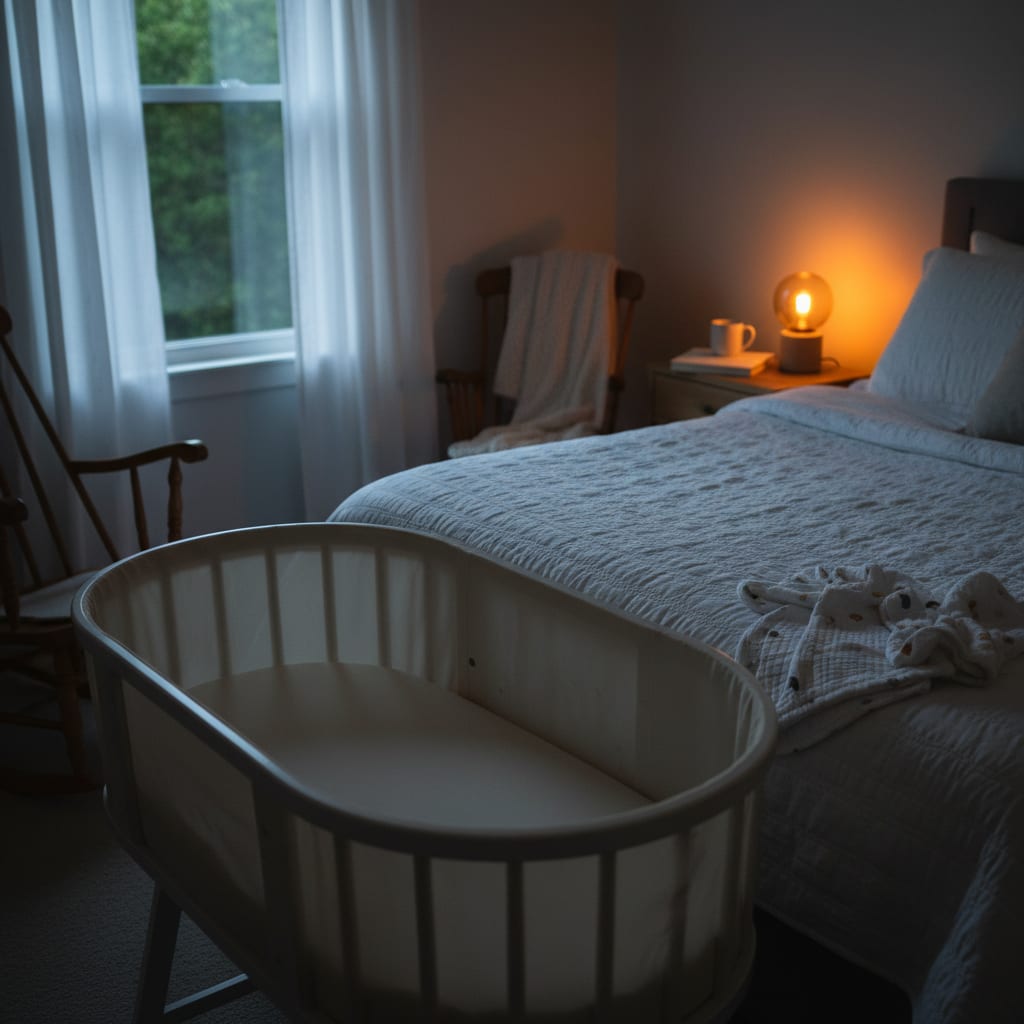
Propping, wedging or inclining the mattress. This is the one parents reach for hardest and the one that matters most. Safe sleep does not change because she’s ill: on her back, on a firm, flat surface that meets safety standards. Books under the legs, a rolled towel under the mattress, a night in the swing or the car seat — all out. Upright is for awake, supervised, on you.
What actually helps, in the order I’d do it
Saline, then suction, then feed. Saline drops first — the AAP describes one to two drops in each nostril, then a rubber suction bulb for infants to draw the loosened mucus back out. The timing is what makes it work: do this ten minutes before a feed and again before the bedtime feed, not in the middle of one. A blocked baby who can’t feed gets hungrier and angrier, and the hunger then becomes its own waking problem. A bulb syringe is awkward at 3am; a tube-style aspirator like the NoseFrida is easier to aim one-handed and easier to see what you’ve actually cleared. Either way, suction sparingly — over-suctioning irritates the lining and makes the swelling worse.
Feed more often, in smaller amounts. She’ll manage short bursts better than long ones, and extra fluids thin mucus. Milk is the fluid — babies under six months don’t need water. Expect the night feeds to multiply; this is one of those weeks where the count means nothing.
Moist air. The AAP suggests a humidifier or vaporizer in the room. I used a cool-mist one purely because no hot water is involved anywhere near a baby. Steamy bathroom time before bed does something similar without equipment.
Upright cuddling before the put-down. Twenty minutes vertical against your chest after the last feed drains things enough to buy the first stretch. Then she goes down flat, on her back.
Lower the bar. Contact naps count. Shifts with your partner count. This is not the week to hold a routine together; it’s the week to get everyone through. If she’s fighting the put-down harder than usual, the same settling techniques for a baby fighting sleep still apply, just with more patience and fewer attempts before you give up and hold her.

When to stop managing and call
Noise is not the measure. Effort is. Call your pediatrician if:
- She is three months or younger and showing any sign of illness at all. The AAP is explicit: at that age, call at the first sign, and call right away for any fever. Colds in very young babies can turn into bronchiolitis, croup or pneumonia quickly.
- Her nostrils widen with each breath, or the skin between and around her ribs and breastbone sucks in with each breath. Those are the two signs the AAP names, and they mean she’s working to breathe.
- She’s over three months with a temperature above 102°F (38.9°C).
- She won’t feed, or has far fewer wet diapers than usual.
- She’s unusually floppy, grey or blue-tinged, or impossible to rouse — that’s emergency care, not a phone call.
- Symptoms are still getting worse after seven to ten days, which is roughly when a cold should be fading.
None of that is diagnosis, and none of it substitutes for the person who knows your baby. When in doubt at 3am, call. Nobody on the other end thinks you’re overreacting.
How long this lasts
Most colds ease slowly over seven to ten days, with congestion usually the last thing to leave — and the AAP notes that most children have around eight to ten colds in their first two years, so this is not your one bad run. Sleep lags the nose by a few days: she’ll be visibly better and still waking, because the waking got a week of practice. It resettles, and faster if you return to the ordinary bedtime the moment she’s well rather than extending the emergency measures. The surviving-night-feeds groundwork picks up from there. If the whole shape of her sleep has gone, the newborn sleep survival guide is the reset.
FAQ: sleeping through a baby’s cold
Can I let my baby sleep upright in a car seat or swing when she’s congested?
No. Safe sleep doesn’t relax because she’s ill — flat, firm and on her back, every sleep. Upright time is for when she’s awake and you’re holding her. If she only settles upright, hold her and take the contact nap rather than leaving her in a seat.
What can I give a 6-month-old for a cold?
Nothing from the cough-and-cold shelf. Saline and suction, extra feeds, moist air, and a call to your pediatrician before any fever or pain medicine — the AAP asks for that call for every child under two. Honey stays out until twelve months and mentholated rubs until two.
Should I wake my baby to suction her nose at night?
No. If she’s asleep and breathing comfortably, leave her. Suction before feeds and before bedtime, when it buys you something. Waking a sleeping baby to clear a nose she’s currently managing fine trades real sleep for tidiness.
Will a cold ruin the sleep progress we made?
It won’t. Illness suspends sleep; it doesn’t delete it. Expect a few ragged nights after she’s well while the extra waking fades, then the old pattern returns. Going back to your normal bedtime as soon as she’s up to it is what shortens the tail.
Sources
- FDA, Use Caution When Giving Cough and Cold Products to Kids
- American Academy of Pediatrics, Coughs and Colds: Medicines or Home Remedies?
- American Academy of Pediatrics, Children & Colds (Upper Respiratory Infections)
- American Academy of Pediatrics, How to Care for Your Child’s Cold
- American Academy of Pediatrics, Sleep Position: Why Back Is Best