Newborn Sounds Congested? Snuffly vs Actually Sick
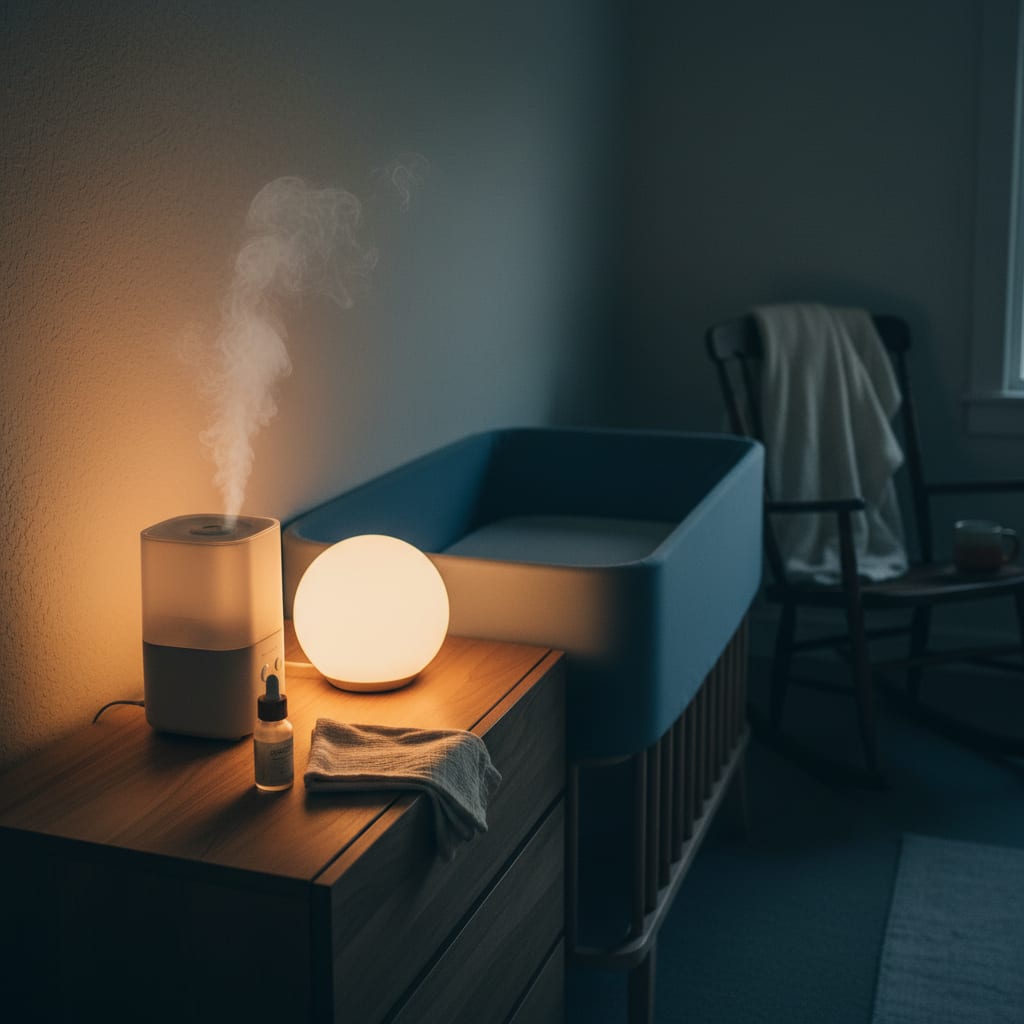
A newborn who sounds congested is usually not sick. Newborns breathe almost entirely through the nose, and those passages are narrow enough that ordinary mucus, dust or a little milk creates a rattly, snorty soundtrack — loudest at night, when she’s lying flat and everything else is quiet. The sound is not the symptom. What matters is how she’s working: a baby who feeds well, breathes without effort and has no fever is snuffly, not ill. A baby whose breathing looks like hard work, or who can’t feed through the blockage, is a different story and needs a call.
Why newborns sound so rattly
They’re obligate nose breathers. A newborn breathes through her nose by design — it’s what lets her feed and breathe at once. So even a small amount of nasal mucus becomes audible immediately, and she can’t clear it by blowing or coughing on demand.
The passages are tiny. Airways the width of a coffee stirrer turn a normal amount of mucus into a snorting noise. Nothing has gone wrong; the plumbing is just small.
She’s still clearing birth fluid. In the first days, residual amniotic fluid and mucus work their way out with the sneezing bursts and gurgles of the first weeks.
Dry, dusty or smoky air makes it worse. Heated or air-conditioned air, dust, fragrance sprays, and above all any smoke or vape residue will thicken things up. Smoke exposure is worth eliminating outright.
Milk goes back up sometimes. Small spit-ups can travel into the nasal passages and leave her sounding blocked for a while afterwards, particularly if she’s fed lying flat.
Everything is louder at night. Lying flat pools mucus, and a silent house has nothing to mask the noise. Nothing is deteriorating at 2am; you’re just closer and it’s quieter.
Snuffly vs actually sick
Sound is not the test. These are:
Effort. Snuffly is noisy but easy — the chest rises smoothly, no straining. Sick is work: fast breathing, nostrils flaring, the skin sucking in between the ribs or at the notch above the breastbone, grunting on every breath.
Feeding. A snuffly baby comes off the breast or bottle, snorts, and goes back on. A genuinely blocked or unwell baby can’t sustain a feed — she gasps, pulls off repeatedly, or refuses.
Temperature. Any fever of 100.4°F (38°C) or higher in a baby under three months is an urgent call at any hour, however mild everything else looks.
Trajectory. Snuffles come and go across a day. Illness builds — more congestion, more coughing, worse feeding, a sleepier or more miserable baby than yesterday.
Everything else. Cough, wheeze, unusual sleepiness, floppiness, fewer wet diapers, or a colour change to the lips or face all move this out of snuffly territory immediately.
What safely helps a blocked nose
Fix the air first. Vacuum and dust her sleep space, drop scented plug-ins and sprays, keep the house strictly smoke-free, and add a cool-mist humidifier like the Crane if your air is genuinely dry — cleaned and refilled daily.
Saline, then patience. A drop or two of sterile saline such as Little Remedies Saline Spray/Drops softens the mucus so she can shift it herself. Use it before feeds rather than after, and check with your pediatrician first at newborn age.
Suction sparingly. If saline alone isn’t enough and the blockage is affecting feeding, gentle suction with a nasal aspirator like the NoseFrida is the standard next step — but not on repeat. Frequent suctioning irritates and swells the lining, which makes congestion worse rather than better.
Upright time helps; propping her bed does not. Holding her upright on your chest while awake is fine and often settles the noise. Never tilt, wedge or prop the mattress, and never add pillows: safe sleep is flat, firm and bare, on her back, every single time. Betteroo’s explainer on sleep position when the nose is blocked covers why the incline hacks circulating online are the wrong answer.
Feed more often, in smaller amounts. A congested baby tires faster at the breast or bottle. Shorter, more frequent feeds keep her intake up while she’s working harder to breathe.
Nothing goes in her. No over-the-counter cold or cough medicine, no decongestants, no vapour rubs, no essential oils, no honey. Any medication decision under three months belongs to your pediatrician.
Normal vs call the pediatrician
| Usually normal | Call the pediatrician |
|---|---|
| Snorty, rattly sounds in a baby who feeds well and breathes easily | Fever of 100.4°F (38°C) or higher under three months — urgent, any hour |
| Noise that’s loudest at night or when she’s lying flat | Fast or labored breathing, nostril flaring, ribs or throat notch pulling in |
| Snuffles that clear after a sneeze, a feed or a position change | Grunting with every breath, or any pause in breathing |
| Occasional congestion after a spit-up | Pale, gray or bluish lips, face or tongue — urgent, any hour |
| Clear, thin nasal moisture, no other symptoms | Congestion that stops her feeding, or feeds that end in gasping |
| A snuffly, noisy sleeper with normal colour and good feeding | Thick, coloured discharge, cough, wheeze, or congestion that keeps worsening |
| — | Unusual sleepiness, floppiness, fewer wet diapers, or a baby who seems unwell |
| — | Your instinct says she’s not right — that’s enough on its own |
Under three months, being cautious is the correct setting. If she does turn out to have a cold, the sleep-when-sick basics matter as much as anything you put in her nose — plus your pediatrician’s guidance, which comes first.
How long the noise lasts
Ordinary newborn snuffliness eases over the first couple of months as the airway grows, though noisy sleep can rumble on well past that. An actual cold in a newborn typically runs a week or two, with congestion often the last thing to leave — but a cold in a baby this young is always worth a call, not a wait-and-see. If the noise is fading week by week and she’s feeding and growing, you’re watching normal newborn plumbing, the same category as the grunting and squeaking that keeps first-time parents standing over the bassinet at night.
FAQ: newborn congestion
Why does my newborn sound congested but has no mucus?
Narrow nasal passages make even a normal, invisible amount of mucus audible, and lying flat concentrates the noise. If she’s feeding well and breathing without effort, a noisy nose with nothing to show for it is routine newborn sound, not illness.
Is it safe to use a nasal aspirator on a newborn?
Generally yes, gently and infrequently, and best after checking with your pediatrician at newborn age. Saline first, suction only if genuine blockage is affecting feeding or sleep, and never repeatedly through the day — over-suctioning irritates the lining and worsens congestion.
Can I raise the head of my baby’s bassinet to help her breathe?
No. Inclined, wedged or propped sleep surfaces are unsafe for infants. Safe sleep stays flat, firm, bare and on her back — the same setup described in the newborn sleep survival guide. Hold her upright while she’s awake and supervised instead.
When should I worry about newborn congestion?
Worry about effort and feeding, not noise: labored or fast breathing, flaring nostrils, ribs pulling in, colour changes, refusing feeds, or any fever of 100.4°F (38°C) or higher under three months — that last one is an urgent call at any hour. You’re doing fine.